 By
By 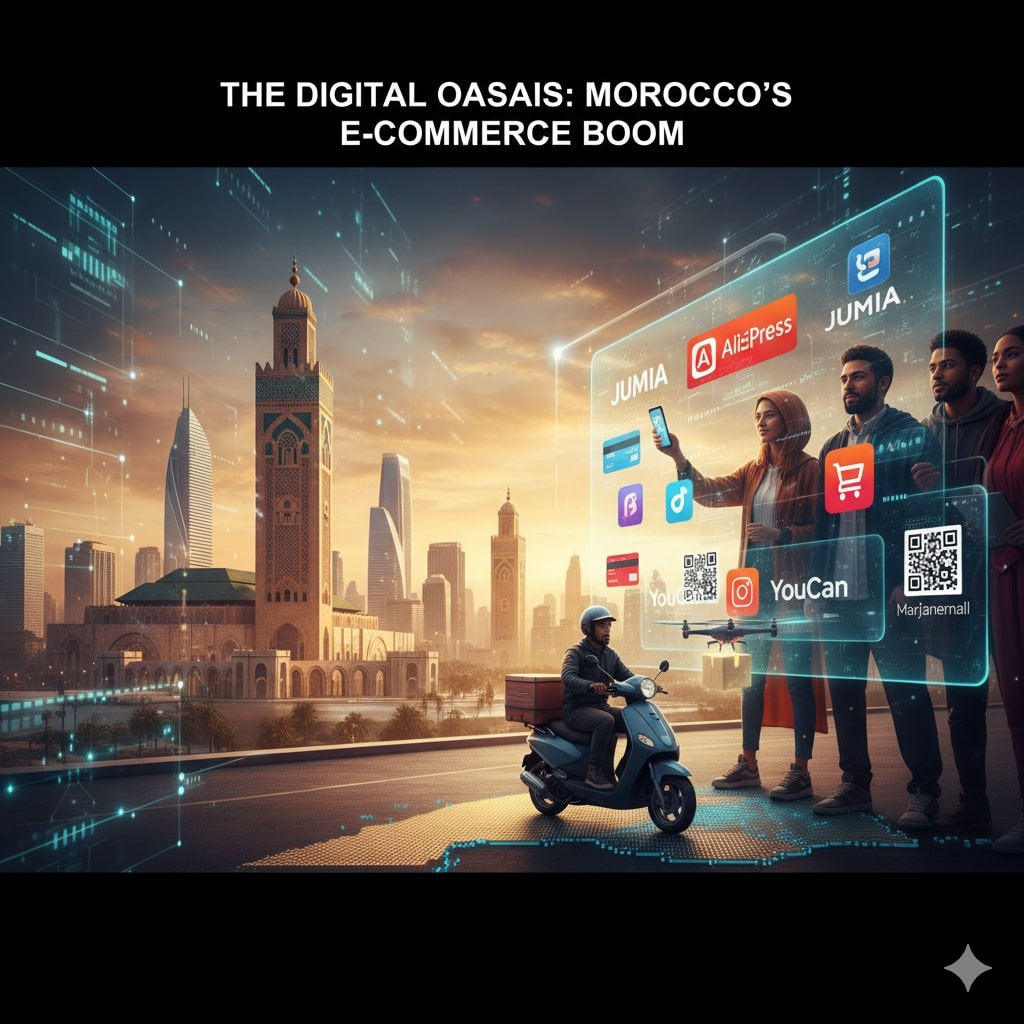
The Kingdom of Morocco is rapidly solidifying its position as a leading digital hub in North Africa, driven by high smartphone penetration, a young, digitally-savvy population, and ambitious government initiatives like the “Digital Morocco 2030” plan. The e-commerce sector, a key pillar of this transformation, has witnessed explosive growth, attracting both global giants and innovative local players. Understanding the top platforms and market dynamics is crucial for anyone looking to navigate this vibrant digital oasis.
1. The E-commerce Powerhouses: Who Dominates the Moroccan Market?
The Moroccan e-commerce landscape is a competitive mix of massive global marketplaces and highly localized platforms. Market leadership is often measured by a combination of annual revenue (GMV) and website traffic.
A. International Giants with Local Presence
These platforms, while international, have adapted their models to the unique Moroccan consumer, particularly by embracing Cash-on-Delivery (COD), which is the preferred payment method for over 80% of online transactions.
- 1. AliExpress (aliexpress.com):
- Market Position: Often cited as the largest e-commerce retailer in terms of online revenue in Morocco.
- Value Proposition: Its dominance is fueled by its massive catalog and highly competitive, low-cost pricing model. It caters to the price-sensitive Moroccan consumer looking for variety, particularly in the Hobby & Leisure and Fashion categories. Cross-border traffic is substantial.
- Traffic: A consistent leader in terms of website traffic, highlighting its enduring popularity.
- 2. Jumia (jumia.ma):
- Market Position: The most prominent Pan-African marketplace, Jumia holds a top position in traffic and brand recognition.
- Value Proposition: Known as the “Amazon of Africa,” Jumia maintains its lead through aggressive expansion of its logistics network, local rural outreach, and strong brand trust. It offers a wide range of products from electronics to fashion and is a key player in localising the online shopping experience.
- Note: Jumia is a critical bellwether for the local e-commerce ecosystem, often pioneering local services.
- 3. Other Global Players:
- Shein (shein.com): A major force in the fast-fashion segment, ranking high in revenue.
- Temu (temu.com): A more recent entrant that has rapidly climbed the traffic rankings, leveraging its ultra-low-cost model.
- Amazon (amazon.fr / amazon.com): While Amazon doesn’t have a dedicated
.madomain with full local fulfillment, it attracts significant traffic, with customers primarily using the French site or intermediary services.
B. The Local & Regional Champions
The rise of Moroccan-built e-commerce builders and local classifieds demonstrates a strong push for platforms tailored to local business needs, particularly in logistics and payment.
- 1. Avito (avito.ma):
- Market Position: The clear leader in the classifieds space and one of the most visited retail-related websites overall.
- Value Proposition: Avito’s strength lies in its ability to facilitate C2C (consumer-to-consumer) and B2C (business-to-consumer) transactions, particularly for used goods, real estate, and cars, capitalizing on the deeply rooted culture of bargaining and local trade.
- 2. YouCan:
- Market Position: A top-tier local e-commerce platform builder, often cited alongside international giants like Shopify in terms of store count.
- Value Proposition: YouCan is designed specifically for the Moroccan and Francophone African market, offering seamless integration with local payment gateways (like YouCan Pay) and dedicated shipping solutions (YouCan Ship). Its focus is on enabling individual entrepreneurs and SMEs to quickly launch and scale their own online stores.
- 3. Storeino:
- Market Position: Another significant Moroccan e-commerce creation platform.
- Value Proposition: It offers flexible solutions and integrates with its own logistics and payment services (Storeino Ship and Storeino Pay), streamlining the fulfillment process which is critical for local businesses.
- 4. Brick-and-Mortar Going Digital:
- Major Moroccan retail chains are actively embracing omnichannel strategies. Sites like Electroplanet (electroplanet.ma) for electronics and Marjane (marjane.ma) for mass retail are becoming key specialist players, leveraging their physical stores as fulfillment and pick-up points.
- 5. MarjanMall Marketplace :
- Marjanemall is a major Moroccan e-commerce marketplace officially launched by the Marjane Group, one of the country’s leading retail and hypermarket chains. Positioned to be a trusted, local alternative in Morocco’s growing digital market, it operates as a third-party intermediary, offering a vast array of certified products across multiple categories, including electronics, home goods, fashion, and international imports. Capitalizing on the Marjane brand’s reputation for trust and quality, Marjanemall aims to provide a secure online shopping experience, competitive pricing (often including customs duties for international items), and efficient logistics across the national territory, consolidating the group’s leadership in both physical and digital distribution channels.
2. Platform Wars: SaaS vs. Marketplace
The Moroccan market shows a dual nature in how businesses choose to sell:
| E-commerce Model | Example Platforms | Local Relevance | Business User Profile |
| Marketplaces (3P) | Jumia, AliExpress, Avito | High traffic, established trust | SME or individual seeking maximum visibility and sales volume. |
| E-commerce Builders (SaaS) | YouCan, Shopify, Storeino | Full brand control, integrates local payment/shipping | Merchant focused on brand building and direct customer relationship (D2C). |
| Open Source | WooCommerce, PrestaShop | High store count due to flexibility/cost | Web developers and tech-savvy businesses needing deep customization. |
Key Insight: While marketplaces capture the bulk of the revenue from consumers, platforms like WooCommerce and Shopify lead in the total number of online stores, indicating that a vast number of Moroccan SMEs are actively building independent digital storefronts.
Related article : How to Source Winning Products in Morocco
3. Key Market Trends & Growth Drivers
The market’s momentum is sustained by several structural and behavioral shifts:
A. Mobile-First Consumerism 📱
Morocco is a mobile-first economy. Over 65% of e-commerce transactions are conducted via smartphones, making mobile optimization an absolute necessity for all platforms and online stores. This drives demand for products easily sold through social media, leading to the rise of Social Commerce and ‘shoppertainment.’
B. Payment Evolution & Trust
Cash-on-Delivery (COD) remains dominant, reflecting a cultural preference for tangibility before payment and a persistent lack of trust in online financial security. However, digital wallets and local payment gateways (like CashPlus, YouCan Pay) are gaining traction, supported by initiatives to increase financial inclusion.
C. The Artisan & Local Goods Boom
There’s a growing international and domestic appetite for authentic Moroccan craftsmanship. B2B platforms like Evollume and international sites like Etsy are becoming important channels for selling traditional goods, such as Berber rugs, argan oil, and kaftans, providing a global showcase for Moroccan SMEs.
D. Government Support
The “Digital Morocco 2030” strategy focuses on strengthening digital infrastructure, workforce training, and extending internet connectivity to rural areas, creating a more favorable environment for e-commerce expansion outside major metropolitan hubs.
Related article : Why You Should Hire an SEO Agency in Casablanca
4. The Logistics and Fulfillment Hurdle 🚧
Logistics remains the “Achilles’ Heel” of Moroccan e-commerce, severely impacting customer experience and conversion rates.
| Challenge | Impact on E-commerce | Emerging Solutions |
| Rural Delivery | Delays and prohibitively high costs outside Casablanca, Rabat, and Marrakech. | Investment in relay points (pick-up stations) and crowd-sourced/collaborative delivery models. |
| High COD Dependency | High rate of package refusal (“Return to Sender” or RTS), severely impacting merchant profitability. | Integration of e-wallets, micro-financing solutions (BNPL), and secure local payment gateways. |
| Cross-Border Complexities | Delays, customs duties, and unpredictable taxation on foreign goods. | Localized fulfillment centers by international giants (e.g., Jumia) and specialized local forwarders. |
Local logistics firms like YouCan Ship, Colis Swift, and the national postal service Poste Maroc are crucial partners, specializing in the last-mile delivery and reverse logistics needed for the high volume of COD transactions.
Conclusion: A Market Poised for the Next Leap 🚀

The Moroccan e-commerce market is a dynamic melting pot where global reach meets local ingenuity. While platforms like AliExpress and Jumia attract the mass market, the rapid growth of local e-commerce builders like YouCan and the dominance of the classifieds giant Avito underscore a unique consumer preference for trusted, locally-adapted, or D2C (Direct-to-Consumer) experiences.
The next phase of growth will depend on successfully addressing the structural challenges of payment trust and logistics in rural areas. With strong government backing and continuous innovation from local tech players, Morocco is well-positioned to unlock its full digital potential, transitioning from an emerging market to a regional e-commerce leader.
Related article : Top Ways to Make Money online from Morocco
Need to talk to an ecommerce expert in Morocco ? Whatsapp Marouane now by clicking this link