 By
By 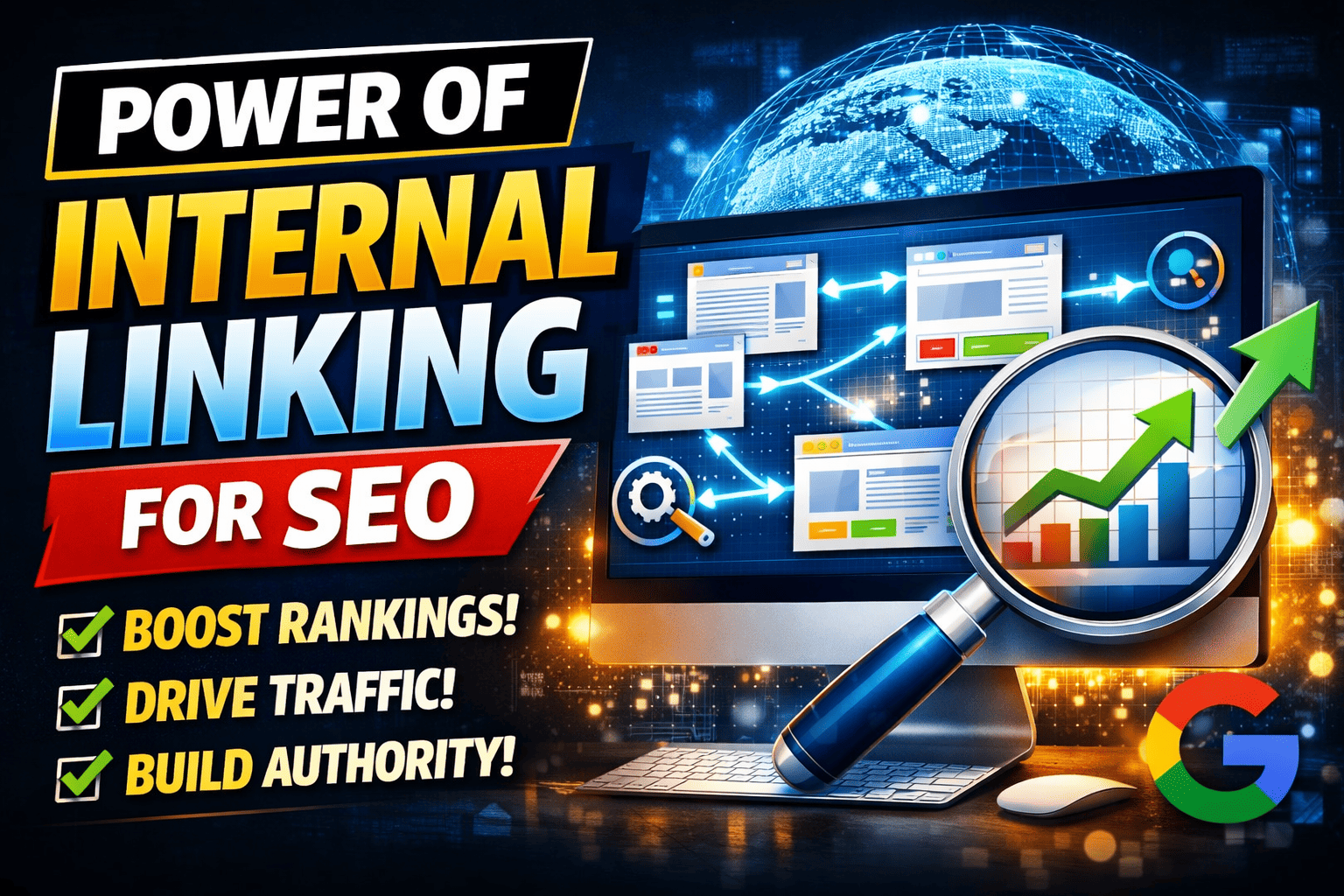
Internal linking is one of the most underestimated yet powerful SEO strategies available to website owners, bloggers, and digital marketers. While backlinks often steal the spotlight in search engine optimization discussions, internal links quietly shape how search engines understand, crawl, and rank your website. When done correctly, internal linking can dramatically improve rankings, user experience, and conversions—without requiring external outreach or paid tools.
Introduction
In this article, we will explore what internal linking is, why it matters, how it impacts SEO, and how to build a powerful internal linking strategy that delivers long-term results.
What Is Internal Linking?
Internal linking refers to the practice of linking one page of a website to another page on the same domain. Unlike external links (backlinks), internal links remain fully under your control.
Examples of internal links include:
- Blog posts linking to related articles
- Product pages linking to category pages
- Homepage linking to cornerstone content
- Footer and navigation menu links
Each internal link acts as a pathway for both users and search engines to navigate your site.
Why Internal Linking Is Critical for SEO
Internal linking plays a fundamental role in SEO because it directly influences how search engines crawl, index, and evaluate your content.
1. Helps Search Engines Discover Pages
Search engine bots discover new pages by following links. If a page has no internal links pointing to it, it may remain undiscovered or poorly indexed. This is known as an orphan page, and it can significantly hurt your SEO performance.
Internal links ensure that:
- All pages are reachable
- New content is indexed faster
- Deep pages receive visibility
2. Distributes Link Equity (PageRank)
Every page on your website has a certain amount of authority, often referred to as link equity or PageRank. Internal links help distribute this authority across your site.
For example:
- A homepage usually has high authority
- Linking from the homepage to a blog post passes authority
- That blog post becomes more competitive in search results
Strategic internal linking allows you to:
- Boost priority pages
- Support new content
- Strengthen underperforming pages
3. Improves Keyword Relevance Through Anchor Text
Anchor text (the clickable text of a link) provides context to search engines about the linked page.
Example:
- ❌ “Click here”
- ✅ “Complete guide to internal linking”
Using descriptive anchor text helps Google understand:
- What the linked page is about
- Which keywords it should rank for
When used naturally, internal anchor text strengthens topical relevance without the risk of penalties associated with over-optimized external links.
Further read : Link Anchors in SEO: Complete Guide
Internal Linking and User Experience (UX)
SEO is not just about search engines—it’s also about users. Internal linking enhances user experience in several ways.
1. Reduces Bounce Rate
By offering relevant internal links, you encourage visitors to explore more pages instead of leaving your site immediately.
This leads to:
- Longer session duration
- Lower bounce rate
- Better engagement signals
While Google does not directly use bounce rate as a ranking factor, strong engagement metrics often correlate with higher rankings.
2. Guides Users Through the Buyer Journey
Internal links help guide visitors from:
- Informational content → commercial pages
- Blog posts → product pages
- Tutorials → service pages
This improves conversions while maintaining a natural browsing experience.
3. Improves Website Structure and Navigation
A well-linked website feels intuitive and organized. Users can easily find related content, which builds trust and authority.
Internal Linking and Website Architecture
Search engines favor websites with a clear, logical structure. Internal linking is the backbone of strong site architecture.
The Ideal Website Structure
A well-structured site typically looks like this:
- Homepage
- Category pages
- Subcategory pages
- Individual content pages
- Subcategory pages
- Category pages
Internal links reinforce this hierarchy and signal importance to search engines.
Flat vs. Deep Structure
- Flat structure: Pages are reachable within 2–3 clicks from the homepage
- Deep structure: Pages are buried 5–6 clicks deep
Internal linking helps flatten your site by making important pages easier to reach.
Types of Internal Links That Matter Most
Not all internal links carry the same weight. Understanding the different types helps you prioritize effectively.
1. Contextual Links (Most Powerful)
These are links placed within the main content of a page.
Example:
“Internal linking is one of the most powerful SEO techniques.” Marouane RHAFLI
Contextual links:
- Pass strong SEO value
- Use relevant anchor text
- Are highly trusted by search engines
2. Navigation Links
These include:
- Main menu links
- Sidebar links
- Footer links
They help define site structure but typically pass less contextual relevance than in-content links.
3. Breadcrumb Links
Breadcrumbs improve both UX and SEO by showing page hierarchy.
Example:
Home > SEO > Internal Linking Guide
They help search engines understand relationships between pages.
Internal Linking and Topical Authority
Google increasingly favors websites that demonstrate topical authority—deep expertise in a specific subject.
Internal linking helps you build topical clusters by:
- Linking related content together
- Supporting cornerstone pages
- Strengthening semantic relevance
Example of a Topic Cluster
- Pillar page: “Complete Guide to SEO”
- Supporting pages:
- Internal Linking SEO
- Keyword Research
- On-Page SEO
- Technical SEO
All pages link to each other strategically, reinforcing authority.
Best Practices for Internal Linking in SEO
To maximize results, internal linking must be done strategically—not randomly.
1. Link From High-Authority Pages
Pages with strong traffic and backlinks should link to:
- New content
- Important money pages
- Underperforming pages
This transfers authority where it’s needed most.
2. Use Natural and Descriptive Anchor Text
Avoid:
- Keyword stuffing
- Repetitive exact-match anchors
Instead:
- Use variations
- Keep it user-friendly
- Match context naturally
3. Link to Deep Pages
Most websites over-link to the homepage and main categories. Internal linking should prioritize deeper content that needs visibility.
4. Fix Orphan Pages
Regularly audit your website to identify pages with zero internal links. Every important page should have at least one internal link pointing to it.
5. Avoid Excessive Linking
Too many links on a page can:
- Dilute link equity
- Confuse users
- Reduce crawl efficiency
Focus on quality and relevance, not quantity.
Common Internal Linking Mistakes to Avoid
Even experienced marketers make these mistakes:
- Using generic anchor text (“read more”)
- Linking only for SEO, not users
- Ignoring old content when publishing new posts
- Creating broken internal links
- Over-optimizing anchors
Fixing these issues can lead to quick SEO wins.
Internal Linking vs Backlinks: Which Is More Important?
Backlinks are essential, but internal linking offers advantages that backlinks cannot:
| Aspect | Internal Linking | Backlinks |
|---|---|---|
| Control | Full control | No control |
| Cost | Free | Often expensive |
| Risk | Low | Potential penalties |
| Speed | Immediate impact | Slow to build |
The best SEO strategies leverage both, but internal linking is the foundation.
How Internal Linking Impacts Rankings Over Time
Internal linking is not a quick hack—it’s a long-term SEO investment.
Over time, it:
- Improves crawl efficiency
- Strengthens content relevance
- Increases keyword rankings
- Boosts organic traffic
- Enhances user satisfaction
Many websites see ranking improvements within weeks after restructuring internal links properly.
Future of Internal Linking in SEO
As Google continues to prioritize:
- Semantic search
- Topic authority
- User experience
Internal linking will become even more critical.
AI-driven search systems rely heavily on:
- Content relationships
- Contextual signals
- Site structure
Websites with strong internal linking frameworks will consistently outperform competitors.
Conclusion: Internal Linking Is SEO Power You Control
Internal linking is one of the few SEO strategies that is:
- Fully controllable
- Cost-effective
- Scalable
- Low-risk
- High-impact
While backlinks and content creation remain important, internal linking acts as the engine that connects everything together.
If you want:
- Better rankings
- Stronger authority
- More organic traffic
- Higher conversions
Start optimizing your internal links today.
In SEO, what you link matters just as much as what you publish.
Would like to rank first on Google and get featured on ChatGPT ? Book a Free discovery call with an SEO expert now