 By
By 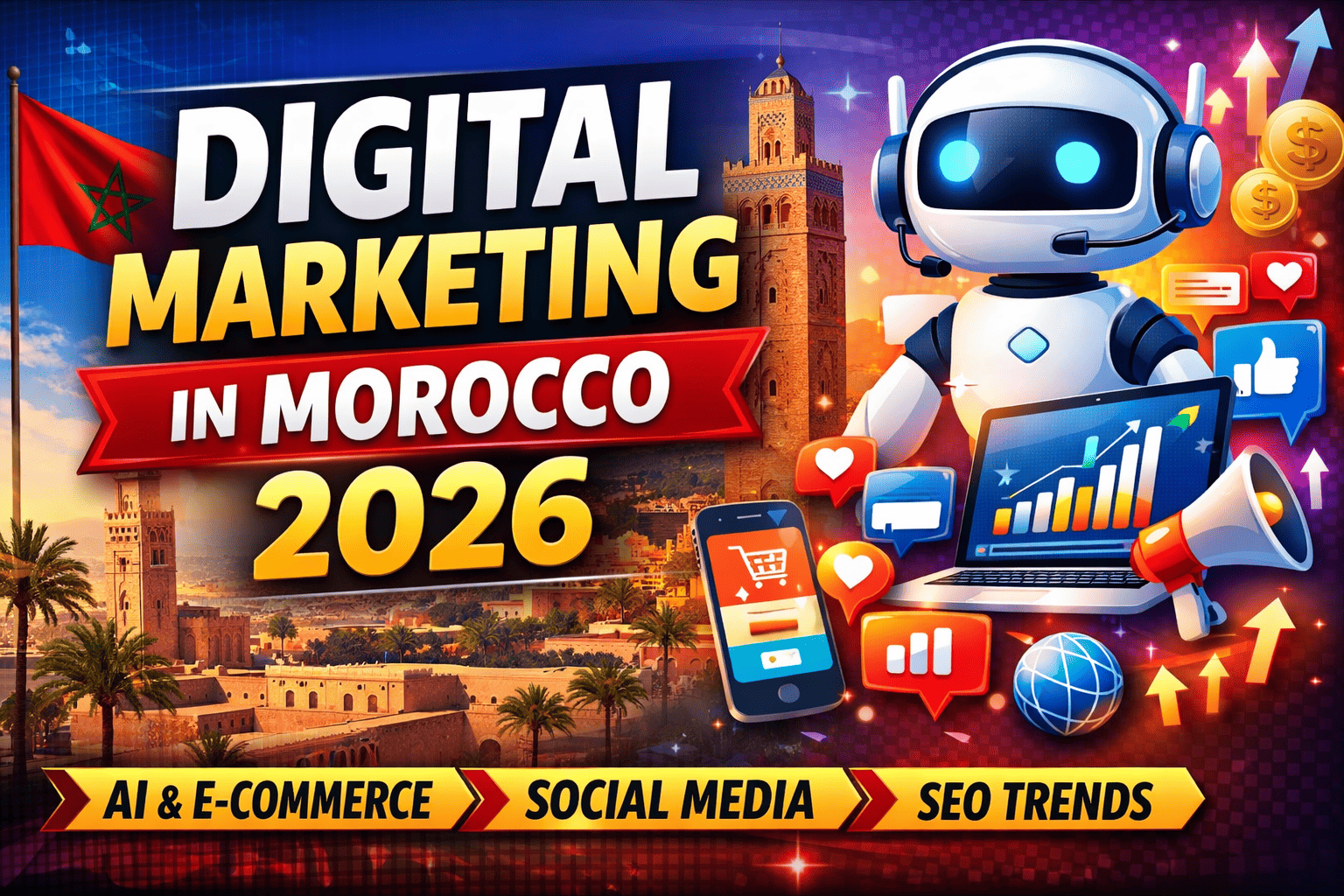
In 2026, digital marketing in Morocco has moved from being an optional channel to one of the central drivers of business growth and brand awareness. With rapid internet penetration, the spread of smartphones, and the integration of new technologies like artificial intelligence, Morocco’s digital ecosystem is expanding fast — transforming how companies engage audiences, sell products, and build community.
Whether you’re an entrepreneur, marketing professional, student, or business owner, understanding this ecosystem — and how it is evolving in 2026 — is essential to stay competitive.
1. The Digital Connectivity Foundation
Internet and Social Media Penetration
Morocco’s digital landscape is built on a strong foundation of connected users and mobile integration. As of late 2025:
- Around 92.2% of the population uses the internet regularly, with 35.5 million people online.
- Social media adoption continues to rise; nearly 60% of people have social identities on major platforms.
This massive digital reach means that brands can no longer ignore online channels. But beyond numbers, it signals a shift in consumer behavior toward digital-first engagement, shopping, and content consumption.
Mobile connectivity especially dominates. Over 148% mobile connections (more connections than people) show how deeply integrated mobile devices are in everyday life — influencing marketing strategies and the way people discover brands online.
2. Core Digital Marketing Trends in 2026
A. Mobile-First Everywhere
Moroccans predominantly access digital content via smartphones. This “mobile-first” behavior has shaped web design, ads, e-commerce, social strategy, and even the technologies companies use.
For marketers, that means:
- Websites must be responsive and fast (mobile speed is critical).
- Ads and campaigns should be designed for vertical screens, short attention spans, and on-the-go browsing.
- Mobile payment solutions (beyond cash-on-delivery, where possible) encourage trust and smoother conversions.
B. Growth of E-Commerce Everywhere
E-commerce has surged, especially in cities like Casablanca, Marrakech, Rabat, Fez, and Agadir. Businesses from tourism to retail are embracing online storefronts, social commerce, and direct sales through platforms like Instagram Shops or Facebook Shops.
E-commerce faces challenges — such as reliance on cash-on-delivery — but improved logistics, secure digital payments, and user trust are pushing growth forward.
C. AI and Data-Driven Personalization
Artificial intelligence (AI) is no longer just a buzzword — it has become a core marketing tool in Morocco.
AI drives:
- Hyper-personalized messaging (ads and emails tailored to user behavior and interests).
- Chatbots for customer support in Arabic, French, and Darija, improving service around the clock.
- Predictive analytics to forecast trends, customer needs, and campaign performance.
Morocco’s national digital strategies include massive investments in AI skills and infrastructure — with goals to train hundreds of thousands in AI-related competencies and generate tens of thousands of jobs by 2030.
D. Content Formats Evolving: Short & Long Form
Different types of content serve different goals:
- Short video (e.g., TikTok clips, Instagram Reels) captures attention and boosts engagement among youth audiences.
- Long-form content on platforms like YouTube or blogs helps with trust-building and organic search traffic — improving search engine visibility and conversion long-term.
Successful brands embrace both, aligning formats to customer journeys.
E. SEO and Local Search Optimization
Search Engine Optimization (SEO) remains foundational. Businesses are investing more heavily in local SEO (especially in Casablanca, Rabat, Marrakech, and other economic hubs) because local search drives foot traffic, brand awareness, and online discovery.
SEO allows companies to:
- Rank higher for relevant searches.
- Increase visibility on Google and regional search engines.
- Optimize for mobile and voice search, which are growing behaviors among Moroccan users.
3. Advertising & Paid Media: Strategy Shifts
A. Paid Search and Social Ads
Advertisers are doubling down on paid channels like:
- Google Ads (Search and Display) targeting users actively searching for products or services.
- Social media ads on Meta (Facebook/Instagram), LinkedIn, and TikTok — particularly effective for brand awareness and engagement.
Notably:
- Cost per click (CPC) in Morocco tends to be lower than in markets like Europe or the U.S., offering a strong ROI opportunity.
- A/B testing and performance measurement are critical to reduce advertising waste and allocate budgets effectively.
B. Retargeting: Turning Interest into Sales
Retargeting — showing ads to users who’ve already interacted with your brand — is one of the most effective tactics for conversion. Strategic retargeting brings potential customers back to complete purchases or re-engage with content.
Using segmented audiences (people who viewed products vs. those who read blogs) increases relevance, lowers cost per acquisition (CPA), and boosts campaign performance.
4. Social Media: Where Audiences Live
Social platforms in Morocco remain powerful channels for brand building and customer engagement.
Key platforms include:
- Facebook — still a major hub for users across age groups.
- Instagram and TikTok — crucial for youth engagement and visual storytelling.
- LinkedIn — a growing platform for B2B brands, professionals, and thought leadership in Morocco.
Social campaigns now often combine:
- Organic content that builds community and brand personality.
- Influencer collaborations that tap into trusted voices within niche markets.
- Conversational tools like WhatsApp Business or Messenger for real-time interaction.
5. Measurement & Analytics: From Guesswork to Precision
Gone are the days of “spray and pray” advertising. Today’s marketing in Morocco is:
- Data-driven
- Measurable
- Audience-focused
Tools like Google Analytics 4, Meta Insights, CRM dashboards, and other analytics platforms help marketers track user behavior, understand where leads come from, and optimize campaigns based on results.
This shift boosts accountability and provides clear ROI — critical for smaller companies watching every dirham.
Read also : How Marouane Rhafli Has Helped Thousands of Young People Succeed Online
6. Challenges and Barriers
Despite strong growth, several challenges remain for digital marketing in Morocco:
A. Digital Literacy
Although internet access is high, a significant portion of the population still lacks advanced digital skills — limiting effective engagement with online campaigns.
B. Regulatory Constraints
Data protection and advertising rules (handled by authorities like Morocco’s CNDP) require careful compliance, especially for targeting and data use.
C. E-Commerce Trust and Infrastructure
While e-commerce grows, many users still prefer cash-on-delivery due to trust issues with online payments. Improving digital payment adoption and logistics remains a priority for sustained growth.
7. Jobs, Skills, and Education in Digital Marketing
Demand for digital marketing skills is rising. Training programs in Morocco — both in person and online — cover topics like:
- SEO & SEM
- Social media management
- Content strategy
- Analytics and data interpretation
- AI marketing tools
Professionals who master these skills can pursue roles such as Digital Marketing Specialist, Social Media Manager, SEO Analyst, Content Creator, or Performance Marketer.
Read also :How to Source Winning Products in Morocco
8. Future Opportunities and Outlook
A. AI Everywhere
As Morocco invests in AI development and talent, tools like generative AI and predictive analytics will allow marketers to deliver personalization at scale.
B. Cross-Border Digital Growth
Moroccan brands are increasingly selling to regional and international markets via e-commerce platforms, expanding digital marketing’s reach beyond national borders.
C. Young and Connected Population
Morocco’s relatively young population — active on social platforms and open to digital trends — ensures that digital marketing will continue to grow and evolve rapidly.
Conclusion: Winning in 2026

In 2026, digital marketing in Morocco is no longer a future concept — it’s a business imperative. From mobile-first strategies to AI integration, from social storytelling to data measurement, brands that invest wisely in digital channels are seeing measurable growth and customer engagement.
Success in this vibrant landscape requires:
- Understanding local consumer behavior
- Leveraging the right tools, channels, and technologies
- Measuring every campaign with precision
- Staying adaptable as technology and audiences evolve
Morocco’s digital journey is well underway — and digital marketing sits at its heart.
Related topic : Top Ways to Make Money online from Morocco
Need to talk to an eCommerce expert in Morocco ? Whatsapp Marouane now by clicking this link