
 By
By 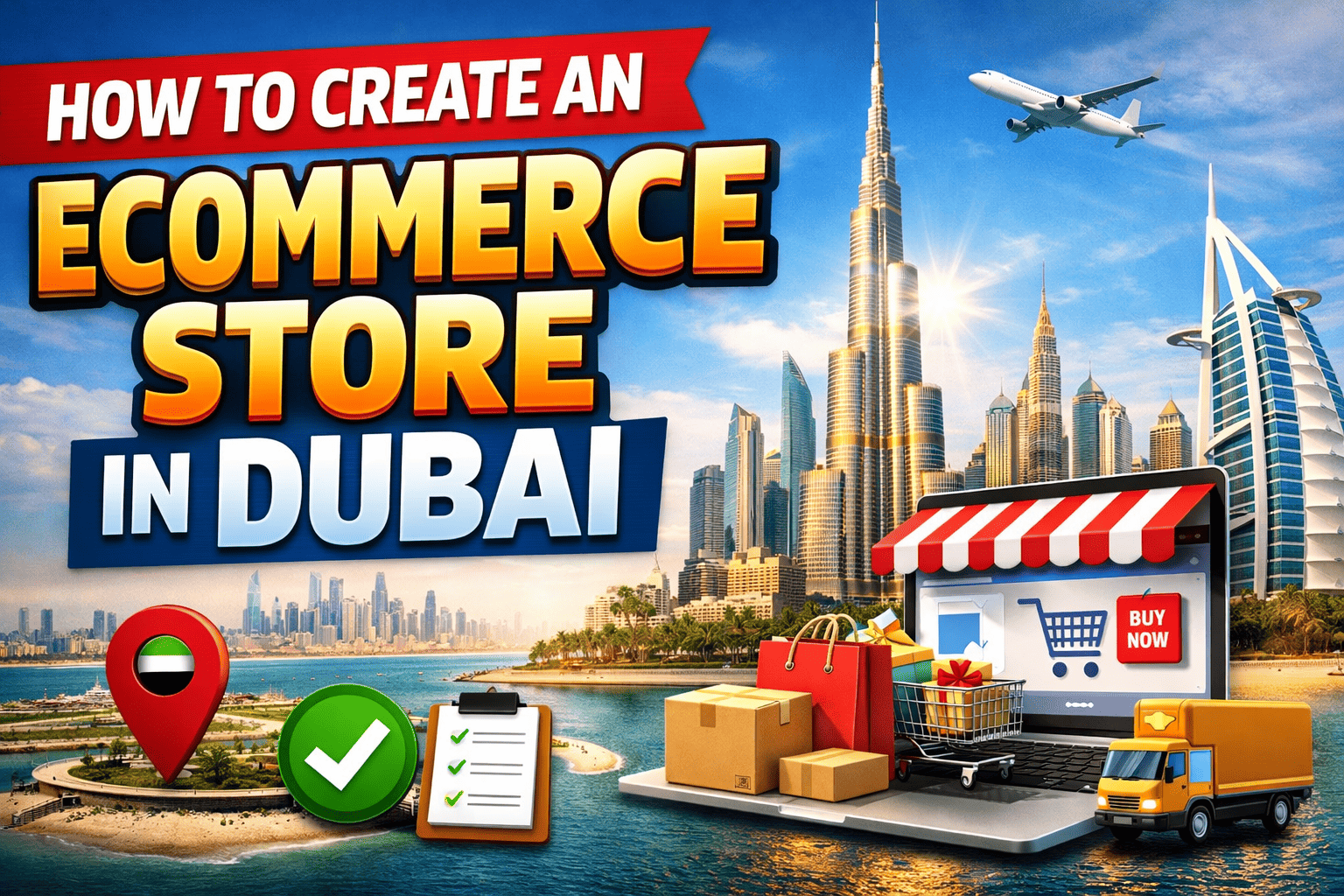
Dubai has rapidly emerged as one of the most attractive destinations in the world for launching an ecommerce business. With a thriving digital economy, high internet penetration, and a business-friendly environment, entrepreneurs from around the globe are choosing Dubai as their gateway to the Middle East, Africa, and Asia.
The ecommerce sector in the UAE is booming, with billions in annual sales and strong growth projections. This makes it an ideal time to start your own online store. However, setting up an ecommerce business in Dubai requires careful planning, legal compliance, and strategic execution.
In this guide, we will walk you step by step through everything you need to know to create an ecommerce store in Dubai.
1. Why Start an Ecommerce Business in Dubai?
Before diving into the process, it’s important to understand why Dubai is such a strong ecommerce hub.
Dubai offers several advantages:
- High online shopping demand with nearly full internet penetration
- Strategic global location connecting Europe, Asia, and Africa
- Tax-friendly environment, including low or zero income tax in many cases
- Advanced logistics and infrastructure enabling fast delivery
- Government support for digital businesses
Additionally, ecommerce sales in the UAE are projected to continue growing significantly, making it a lucrative market for both startups and established brands .
2. Choose Your Ecommerce Business Model
The first step is deciding what type of ecommerce business you want to run. This choice will influence your licensing, costs, and operations.
Common models include:
- B2C (Business to Consumer) – selling directly to customers
- B2B (Business to Business) – selling to other companies
- Dropshipping – selling without holding inventory
- Marketplace selling – using platforms like Amazon or Noon
- Digital products/services – courses, subscriptions, software
You should also decide what products you will sell and identify your target audience. Market research is crucial at this stage to understand customer preferences and competition .
3. Decide Between Mainland and Free Zone
One of the most important decisions is choosing where to register your business: mainland or free zone.
Mainland
- Allows you to sell directly within the UAE market
- Ideal for businesses targeting local customers
- Requires licensing from the Department of Economy and Tourism (DET)
Free Zone
- Offers 100% foreign ownership
- Provides tax benefits and easier setup
- Often allows virtual offices
- May limit direct trade within UAE without a distributor
Free zones are generally more cost-effective and faster to set up, while mainland companies offer greater flexibility for local trading .
4. Register Your Business and Trade Name
Once you choose your jurisdiction, you need to:
- Select a unique business name
- Ensure it complies with UAE naming regulations
- Choose a legal structure (e.g., sole proprietorship or LLC)
You typically need to submit multiple name options for approval before proceeding .
5. Obtain an Ecommerce License
An ecommerce license is mandatory to legally operate in Dubai. Running an online business without a license is not allowed .
Types of Ecommerce Licenses:
- Mainland ecommerce license (DED/DET)
- Free zone ecommerce license
- E-trader license (for individuals in some cases)
This license officially allows you to sell products and services online through websites or social media platforms .
Licensing Steps:
- Submit application and documents
- Get initial approval
- Pay fees
- Receive your trade license
The process can take anywhere from 1 to 8 weeks, depending on your setup .
6. Open a Business Bank Account
After obtaining your license, you must open a corporate bank account. This is essential for:
- Receiving payments
- Paying suppliers
- Managing business finances
Banks may require:
- Trade license
- Business plan
- Website details
- Supplier contracts
Once approved, you can start processing transactions securely .
7. Build Your Ecommerce Website
Your website is the core of your ecommerce business. It should be:
- User-friendly and mobile-optimized
- Secure (SSL encryption)
- Fast-loading
- SEO-optimized
You can use platforms like:
- Shopify
- WooCommerce
- Magento
- Custom-built solutions
A well-designed website improves customer trust and conversion rates.
8. Integrate Payment Gateways
To accept online payments, you need to integrate a payment gateway.
Popular options in the UAE include:
- PayTabs
- Telr
- Stripe
- Network International
Secure payment integration is essential for customer trust and compliance with UAE regulations .
9. Set Up Logistics and Delivery
Logistics is a critical factor in ecommerce success.
You have two main options:
In-house logistics
- Full control over delivery
- Higher operational costs
Third-party logistics (3PL)
- Easier to scale
- Lower upfront investment
Dubai’s advanced logistics network ensures efficient delivery across the UAE and internationally .
10. Ensure Legal Compliance
To operate legally, you must comply with UAE regulations:
- Register for VAT (if applicable)
- Follow consumer protection laws
- Ensure data privacy and cybersecurity
- Obtain approvals for restricted products (e.g., food, cosmetics)
Authorities strictly monitor ecommerce businesses to prevent counterfeit or illegal goods .
11. Market Your Ecommerce Store
Once your store is ready, you need to attract customers.
Effective marketing strategies include:
- Search Engine Optimization (SEO)
- Social media marketing (Instagram, TikTok, Facebook)
- Google Ads and paid campaigns
- Email marketing
- Influencer partnerships
Dubai’s diverse population offers access to a global audience, making digital marketing especially powerful.
12. Understand Costs Involved
Starting an ecommerce business in Dubai involves several costs:
Basic Costs:
- Ecommerce license: starting from AED 12,500
- Website development
- Payment gateway fees
- Marketing budget
- Logistics setup
Estimated Total:
- Entry-level: AED 10,000–25,000
- Mid-range: AED 80,000+
- Advanced setups: significantly higher
Free zones are generally cheaper than mainland setups.
13. Timeline to Launch
The typical timeline to launch an ecommerce store in Dubai is:
- Planning: 1–2 weeks
- Licensing: 1–4 weeks
- Website & setup: 2–4 weeks
Overall, you can launch within 4 to 8 weeks in most cases .
14. Tips for Success
To succeed in Dubai’s competitive ecommerce market:
- Focus on a niche market
- Provide fast delivery and excellent customer service
- Optimize for mobile users
- Build a strong brand identity
- Use data analytics to improve performance
Consistency and customer experience are key drivers of long-term success.
Conclusion
Creating an ecommerce store in Dubai is a highly rewarding opportunity, thanks to the city’s booming digital economy, strategic location, and supportive business environment.
While the process involves several steps—such as obtaining a license, building a website, and setting up logistics—it is relatively straightforward compared to many other global markets.
By carefully planning your business model, choosing the right jurisdiction, and focusing on customer experience, you can successfully launch and scale your ecommerce business in Dubai.
With the right approach, Dubai can serve not just as a local market—but as a global launchpad for your ecommerce brand.
Related articles :