
 By
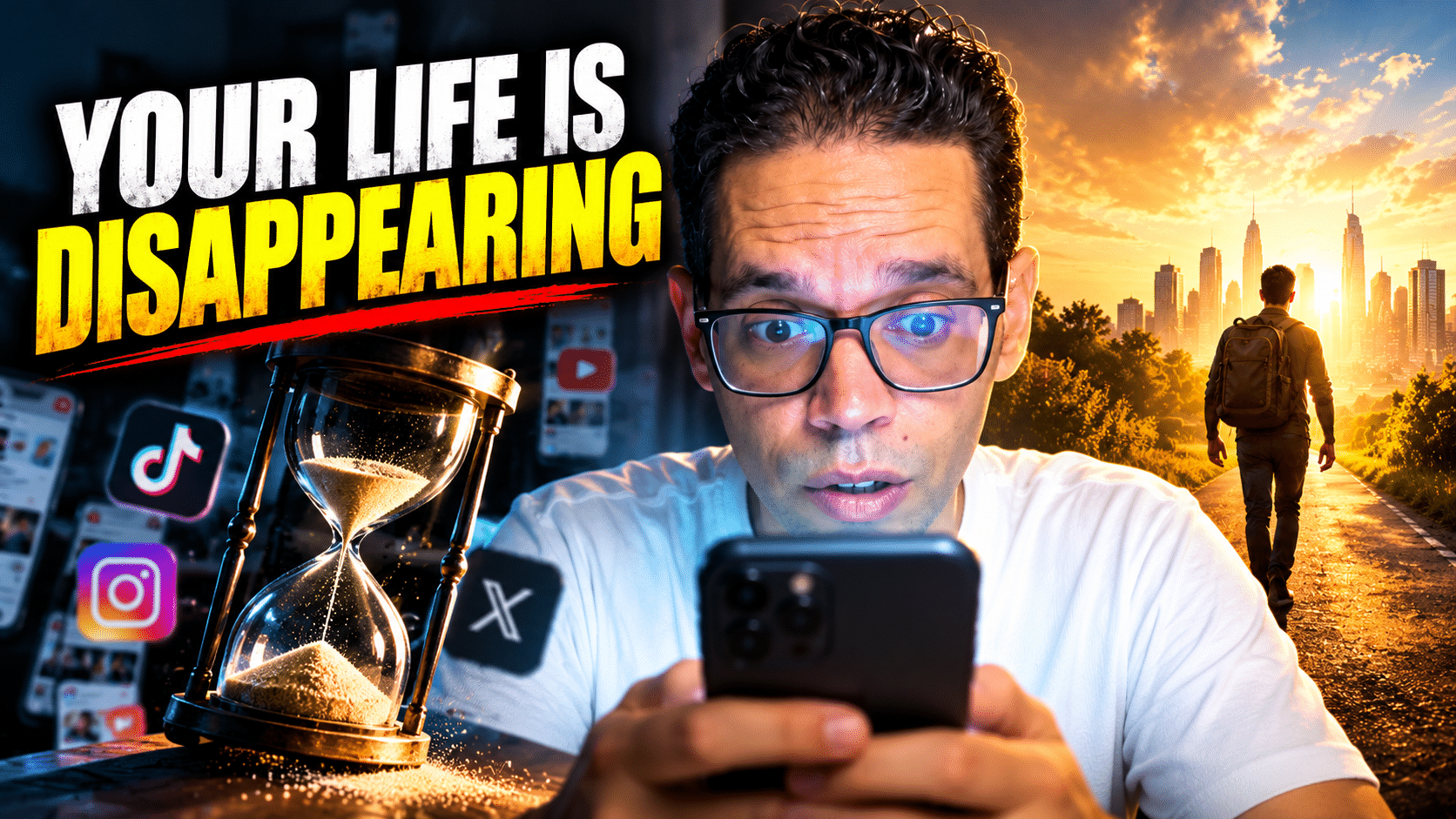
Imagine meeting yourself 20 years from now.
Not the person you will actually become, but the person you could have become if you had spent less time scrolling through your phone and more time building your future.
Same intelligence. Same background. Same opportunities.
But this version of you spent those extra hours learning valuable skills, building businesses, improving relationships, and pursuing meaningful goals.
Would you recognize that person?
More importantly, would you regret the opportunities you allowed to disappear?
We live in an extraordinary technological era. Smartphones give us instant access to information, education, business opportunities, and people across the world.
Yet the same technology that can help us build extraordinary lives can also distract us from living them.
Your phone isn’t necessarily the problem. The problem is what happens when you stop controlling how you use it.
Let’s explore the hidden cost of phone addiction, why endless scrolling can undermine your ambitions, and how to reclaim your attention before another year disappears.
How Much of Your Life Are You Spending on Your Phone?
Most people don’t think much about spending 15 minutes on Instagram or watching a few YouTube Shorts.
After all, what’s another 15 minutes?
The problem is that those minutes accumulate.
Imagine spending four hours per day on your smartphone.
That’s:
- 28 hours every week.
- Approximately 1,460 hours every year.
- Around 14,600 hours over ten years.
- More than 608 complete 24-hour days.
That’s nearly 1.7 years of accumulated time.
Of course, not every minute of screen time is wasted. Many people use smartphones for work, education, communication, and business.
But what if even half that time was spent consuming content you wouldn’t remember tomorrow?
What could you accomplish with those recovered hours?
You could learn programming, launch an online business, improve your physical fitness, develop a professional skill, or spend more meaningful time with people you love.
The real cost of excessive scrolling isn’t simply the time you lose. It’s what you could have done with that time.
Why Social Media Makes It So Difficult to Stop Scrolling
Social media platforms are designed to make discovering content effortless.
Endless feeds, personalized recommendations, notifications, and short-form videos create an environment where there’s always something else to watch.
One video becomes five.
Five become twenty.
Before you realize it, an hour has passed.
Research published in Computers in Human Behavior has examined how social media notifications interrupt ongoing cognitive tasks, demonstrating that digital interruptions can temporarily disrupt attention.
But notifications aren’t the entire problem.
Sometimes we reach for our phones without receiving any notification at all.
We do it because we’re bored, uncomfortable, tired, or trying to avoid something difficult.
For entrepreneurs and ambitious professionals, this can become especially damaging.
Building something meaningful often requires concentration, patience, and the ability to work without immediate rewards.
Endless scrolling offers the opposite experience: constant novelty with almost no effort.
Over time, that contrast can make demanding work feel less appealing.
The Productivity Illusion: Watching Success Isn’t the Same as Achieving It
One of the most interesting problems with social media is that it can make us feel productive even when we’re not producing anything.
Consider someone who spends two hours watching motivational videos.
They watch entrepreneurs discussing business strategies.
They save tutorials about artificial intelligence.
They listen to successful people explaining how they built their companies.
At the end of the evening, they feel inspired.
But what did they actually create?
Did they launch a website?
Did they contact a potential customer?
Did they practice a new skill?
Did they take one measurable step toward their goals?
Sometimes the answer is no.
There’s nothing wrong with learning from successful people. Educational content can be extremely valuable.
But consuming information is only the beginning.
Knowledge becomes valuable when you apply it.
Watching 100 videos about entrepreneurship will not automatically make you an entrepreneur.
Watching fitness content will not make you physically fit.
Watching someone develop software will not make you a developer.
Eventually, you have to stop watching and start doing.
Watch My Podcast: Your Phone Is Stealing Your Future
In my latest audio podcast, I explore the uncomfortable relationship between smartphone habits, wasted time, ambition, and the person we could become.
I discuss why social media can create an illusion of progress, how digital distractions affect our priorities, and why taking control of our attention is essential for building a meaningful future.
Watch or listen to the full episode below:
Podcast: Your Phone Is Stealing Your Future (And You Don’t Even Notice) — Marouane RHAFLI
Social Media Comparison Is Changing How We Define Success
Another hidden consequence of excessive social media consumption is constant comparison.
Every day, we’re exposed to people displaying expensive cars, luxury vacations, successful businesses, perfect relationships, and extraordinary lifestyles.
But we’re rarely seeing their complete reality.
We’re seeing selected moments.
A business owner might share their revenue without explaining their expenses.
An influencer might display luxury products they don’t own.
An entrepreneur might celebrate a successful launch without discussing the years of unsuccessful attempts that came before it.
When you compare your ordinary life to someone else’s carefully selected highlights, you can develop unrealistic expectations.
You might begin believing you’re falling behind.
You might feel pressured to earn more money, buy expensive things, or achieve success faster than is realistic.
Ironically, the time spent comparing yourself to others could be used to improve your own situation.
Stop comparing your unfinished journey to someone else’s promotional material.
Why Attention Is Becoming a Valuable Business Skill
As an entrepreneur and someone who works with digital technology, I don’t believe the solution is abandoning smartphones or social media.
Quite the opposite.
Technology has created opportunities that previous generations could barely imagine.
You can launch an online store, create educational content, develop software, reach international customers, and build a personal brand using tools available on a laptop or smartphone.
But those opportunities require something increasingly difficult to protect: uninterrupted attention.
Consider two aspiring entrepreneurs.
The first spends three hours every evening watching business content.
The second spends one hour learning and two hours implementing what they’ve learned.
After a week, their progress might look similar.
After a year, their results could be dramatically different.
The second person has accumulated hundreds of hours of practical experience.
They may have launched projects, made mistakes, received feedback, and improved their skills.
The first person may still be searching for the perfect tutorial.
This is why I believe attention management is becoming an important competitive advantage.
You don’t need to consume more information than everyone else. You need to turn useful information into action.
Your Phone Can Build Your Business or Distract You From It
There’s an important distinction between productive screen time and passive consumption.
For example, a Shopify merchant might use their phone to communicate with customers, review orders, create content, or monitor marketing campaigns.
A developer might use it to research solutions.
A content creator might use it to publish videos and connect with an audience.
These activities can generate genuine value.
But opening Instagram to respond to a customer and spending another 45 minutes watching unrelated Reels are two very different things.
The device hasn’t changed.
Your intention has.
This is why measuring total screen time alone doesn’t tell the complete story.
The more useful question is:
How much of my screen time supports the life I’m trying to build?
For entrepreneurs, answering that question can reveal opportunities to improve productivity without abandoning useful technology.
The Hidden Opportunity Cost of Doomscrolling
Doomscrolling generally refers to repeatedly consuming negative or distressing online content, often despite wanting to stop.
More broadly, habitual scrolling can become a way to avoid uncertainty, boredom, or difficult responsibilities.
Maybe you have a business idea you’ve been postponing.
Maybe you want to learn a new skill.
Maybe you’ve been planning to launch a YouTube channel, write a book, or start exercising.
You tell yourself you’ll begin tomorrow.
But tomorrow arrives, and your attention goes somewhere else.
Weeks become months.
Months become years.
Eventually, the greatest loss may not be the entertainment you consumed.
It may be the projects you never started.
This doesn’t mean every free moment must be productive. Rest, entertainment, and relaxation are essential parts of a balanced life.
The issue is when unplanned consumption repeatedly replaces activities that matter to you.
There’s a difference between choosing to relax and repeatedly postponing your own ambitions.
How to Reduce Phone Addiction: A Practical 30-Day Challenge
You don’t need to throw away your smartphone to regain control of your time.
Start with a simple experiment.
Week 1: Understand Your Screen Time
Check how much time you spend on different applications.
On an iPhone, use Apple’s Screen Time feature. On Android, look for Digital Wellbeing.
Identify which applications support your goals and which primarily consume your attention.
Don’t judge yourself. Just understand your habits.
Week 2: Remove Unnecessary Distractions
Disable notifications that don’t require immediate attention.
Move distracting applications away from your home screen.
Avoid checking social media immediately after waking up.
Consider keeping your phone outside your workspace during periods of concentrated work.
The objective is to make distraction less automatic.
Week 3: Replace Scrolling With Something Meaningful
Choose one activity you’ve been postponing.
It could be learning a professional skill, developing a business idea, exercising, reading, or spending time with family.
Dedicate 30–60 minutes per day to that activity.
If you reclaim one hour daily, you’ll recover approximately 365 hours over a year.
That’s enough time to make meaningful progress on a substantial project.
Week 4: Measure What You’ve Built
Don’t focus exclusively on reducing screen time.
Ask what you’ve accomplished with the time you’ve recovered.
Have you developed a new skill?
Completed a project?
Improved a relationship?
Built a healthier routine?
The purpose of reducing unnecessary scrolling isn’t simply to spend less time on your phone.
It’s to spend more time living intentionally.
The Future You Are Building Starts With Your Daily Habits
It’s tempting to believe that success comes from one extraordinary decision.
Launching the perfect business.
Discovering the perfect investment.
Finding the perfect opportunity.
But meaningful progress often comes from smaller decisions repeated consistently.
One hour of focused work.
One useful skill practiced regularly.
One project completed instead of postponed.
One conversation with someone you care about.
These decisions may seem insignificant individually, but their effects can accumulate.
And that’s why your relationship with your smartphone matters.
Not because smartphones are inherently harmful.
Not because social media has no value.
But because attention is limited, and every hour spent on one activity is an hour unavailable for something else.
Final Thoughts: Stop Watching Your Future Disappear
Imagine looking back on your life 20 years from now.
Will you remember the thousands of videos you watched?
Probably not most of them.
But you may remember the business you built, the skills you developed, the people you helped, and the experiences you created.
You may also remember the opportunities you repeatedly postponed.
The good news is that you don’t need to change your entire life tomorrow.
You can start with one hour.
One decision.
One meaningful action.
Your phone can be a powerful tool for learning, communicating, creating, and building a business.
But it should remain a tool—not become the thing that decides how you spend your life.
Stop spending all your time watching other people build their dreams. Start building yours.