 By
By 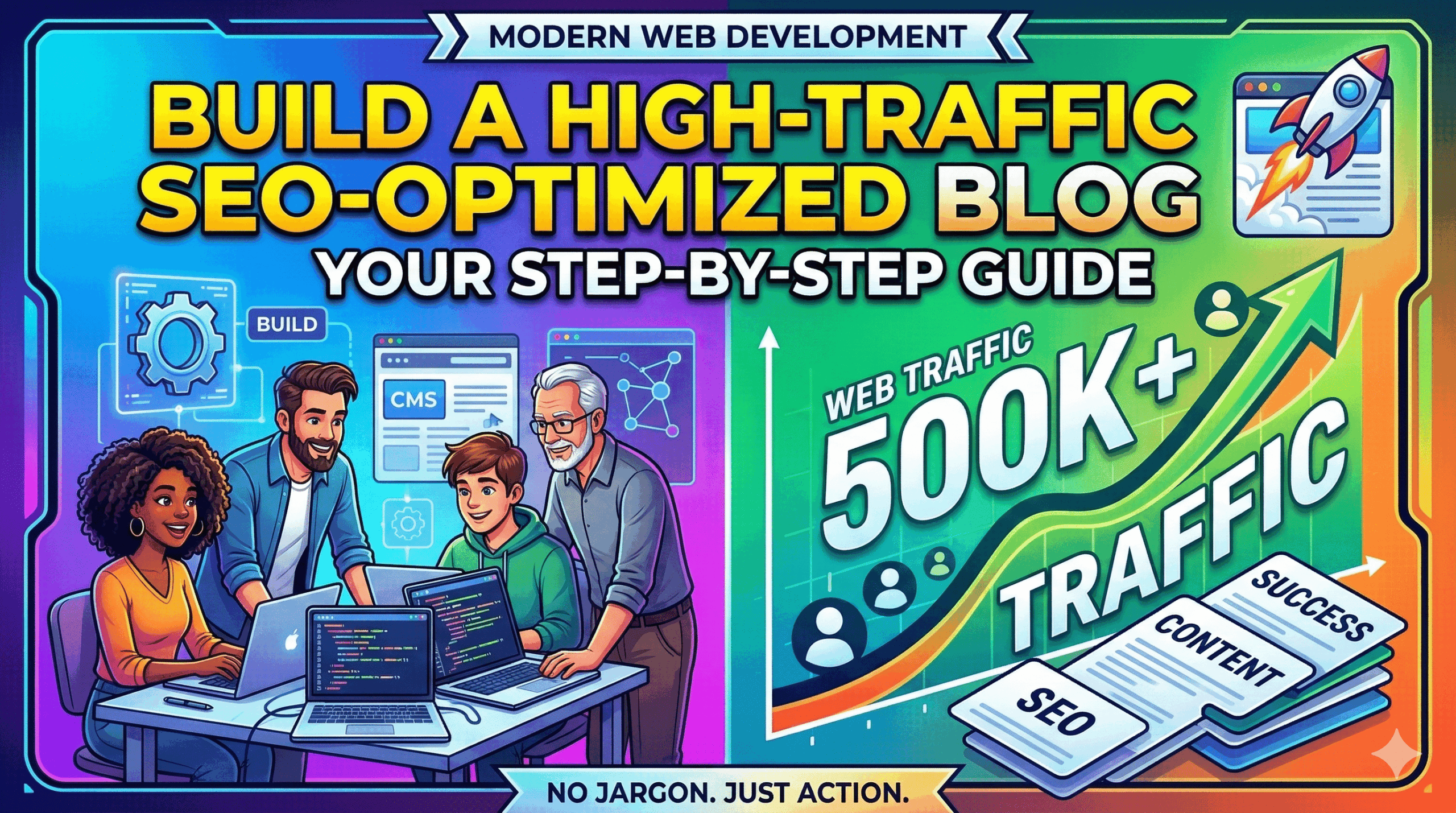
In the early days of the internet, building a blog meant throwing together some basic HTML, picking a vibrant background color, and writing whatever came to mind. Today, launching a successful blog requires a strategic fusion of modern web development and Search Engine Optimization (SEO). If your goal is to build a platform that actually draws in readers, generates revenue, and scales reliably, you need to approach your blog as a serious digital product.
Building a high-traffic, SEO-optimized blog is not just about writing great content; it is about creating a technical foundation that allows search engines to easily discover, crawl, and index that content, while providing a seamless, lightning-fast experience for your users.
This guide breaks down the step-by-step process of modern web development tailored specifically for creating high-performing blogs. From choosing your technology stack to implementing advanced technical SEO, this comprehensive roadmap will help you turn your ideas into a high-traffic reality.
Phase 1: Planning and Strategic Foundation
Before you write a single line of code or purchase a domain name, you must establish a solid strategy. A blog built without a clear purpose and target audience will struggle to gain traction, regardless of how well it is coded.
Defining Your Niche and Audience
Search engines favor topical authority. This means websites that cover a specific subject in great depth rank higher than broad, unfocused sites. Define your niche clearly. Are you writing about personal finance for freelancers? Sustainable travel? Advanced machine learning tutorials?
Understanding your audience dictates everything from the design aesthetic to the tone of your writing and the site architecture. Create user personas to guide your development choices, ensuring that the platform you build serves the exact needs of the people you want to reach.
Strategic Keyword Research
Keyword research is the blueprint for your blog’s architecture. Use tools like Ahrefs, SEMrush, or Google Keyword Planner to identify what your target audience is searching for.
Look for a balance of:
- Head terms: Broad, high-volume keywords (e.g., “Web Development”).
- Long-tail keywords: Specific, lower-volume, but highly intent-driven queries (e.g., “how to optimize Next.js images for SEO”).
Your initial keyword research will inform how you categorize your blog posts, how you structure your site’s navigation, and what pillar pages you need to create first.
Choosing the Right Modern Tech Stack
The technology you use to build your blog heavily influences its speed, security, and scalability. Modern web development offers several distinct paths:
- Traditional Content Management Systems (CMS): Platforms like WordPress remain incredibly popular. They are user-friendly and boast massive plugin ecosystems for SEO (like Yoast or RankMath). However, traditional CMS platforms can become bloated and slow if not carefully managed.
- Static Site Generators (SSGs): Tools like Hugo, Jekyll, or Eleventy generate static HTML pages at build time. Because there is no database querying on the fly, SSGs are incredibly fast and highly secure. They are excellent for SEO but require more technical knowledge to set up and manage content (often via Markdown).
- Headless CMS and Jamstack: This is the pinnacle of modern web development for content-heavy sites. You use a headless CMS (like Sanity, Contentful, or Strapi) to manage your content backend, and a modern frontend framework (like Next.js, Nuxt, or Gatsby) to build the user interface. This approach offers unparalleled speed, security, and developer flexibility, making it highly favorable for Core Web Vitals and SEO.
Phase 2: Technical Setup and Infrastructure
With your plan in place, it is time to lay the digital concrete. Your infrastructure choices directly impact your site’s uptime, speed, and perceived trustworthiness.
Domain Name and Hosting Selection
Your domain name should be memorable, brandable, and ideally give some hint as to what the blog is about. Keep it short and avoid numbers or hyphens, which can look spammy.
When it comes to hosting, do not cut corners. Shared hosting might be cheap, but it often leads to slow server response times—a direct negative ranking factor for search engines. Consider these options based on your tech stack:
- For WordPress: Managed WordPress hosting like WP Engine or Kinsta.
- For Jamstack/Static Sites: Vercel, Netlify, or Cloudflare Pages. These platforms offer seamless continuous deployment and distribute your content via global Edge networks, ensuring blazing-fast load times worldwide.
SSL Certificates and Security Protocols
Security is a fundamental requirement for modern web development. Google has officially stated that HTTPS is a ranking signal. An SSL certificate encrypts data between your server and your users’ browsers.
Most modern hosting providers (including Vercel, Netlify, and managed WordPress hosts) include automated, free SSL certificates via Let’s Encrypt. Beyond SSL, implement basic security headers, use strong authentication for your CMS, and set up a Web Application Firewall (WAF) like Cloudflare to protect against DDoS attacks and malicious bots.
Phase 3: Web Design and User Experience (UX)
Google’s algorithms heavily weigh how users interact with your site. If your blog looks outdated, is hard to navigate, or loads slowly, visitors will bounce back to the search results, signaling to Google that your site is not a good result.
Mobile-First and Responsive Design
Over 60% of all web traffic comes from mobile devices, and Google uses mobile-first indexing. This means Google primarily uses the mobile version of your site for indexing and ranking.
Your blog must not just “work” on mobile; it must be designed for mobile. Use responsive design frameworks like Tailwind CSS or Bootstrap. Ensure touch targets (buttons, links) are large enough to tap easily, text is readable without zooming, and horizontal scrolling is completely eliminated.
Site Architecture and Intuitive Navigation
A well-structured site helps both users and search engine crawlers find what they need. Implement a logical, flat architecture where any page on your site is reachable within three clicks from the homepage.
Use clear, descriptive category names for your blog topics. Implement breadcrumb navigation to help users understand where they are on your site and allow search engines to better grasp the hierarchy of your content.
Optimizing Site Speed and Performance
Site speed is a critical ranking factor. A slow blog will bleed traffic. Modern web development requires a proactive approach to performance:
- Minify Code: Compress HTML, CSS, and JavaScript files to reduce their size.
- Lazy Loading: Implement lazy loading for images and videos so they only load when they scroll into the user’s viewport.
- Caching: Utilize browser caching and server-side caching to serve content faster to returning visitors.
- Content Delivery Network (CDN): A CDN stores copies of your site’s static assets on servers around the world, reducing the physical distance data has to travel to reach your users.
Phase 4: On-Page SEO Best Practices
With a fast, well-designed platform built, you must optimize the actual content. On-page SEO is the practice of optimizing individual web pages to rank higher and earn more relevant traffic.
Crafting SEO-Optimized Content
High-quality content is the engine of a high-traffic blog. Address the user’s search intent directly. If they are searching for a “step-by-step guide,” give them numbered, actionable steps. If they are searching for “what is,” provide a clear, concise definition immediately.
Your content must be original, comprehensive, and provide unique value that competitors lack. Break up large walls of text with headers, bulleted lists, and multimedia to keep readers engaged.
Title Tags, Meta Descriptions, and URL Slugs
These elements are often your first interaction with a potential reader on the Search Engine Results Page (SERP).
- Title Tags: Keep them under 60 characters. Include your primary keyword near the beginning, and make them compelling enough to click.
- Meta Descriptions: Keep them under 160 characters. While not a direct ranking factor, a well-written meta description acts as ad copy, improving your Click-Through Rate (CTR)—which is a ranking factor.
- URL Slugs: Keep URLs short, descriptive, and keyword-rich. Avoid using dates or long strings of numbers. (e.g.,
yourdomain.com/modern-web-development-guideis better thanyourdomain.com/p=12345).
Strategic Internal and External Linking
Internal links connect your content, establish site architecture, and spread link equity (ranking power) throughout your blog. When writing a new post, link back to older, relevant pillar pages. Use descriptive anchor text rather than generic phrases like “click here.”
External linking (linking to authoritative outside sources) builds trust and shows search engines that you have done your research. Link out to high-quality, relevant data sources, academic papers, or industry leaders.
Advanced Image Optimization
Images enhance the user experience but can severely slow down your site if handled poorly.
- File Formats: Serve images in next-gen formats like WebP or AVIF, which offer superior compression compared to JPEG or PNG.
- Compression: Always compress images before uploading them.
- Alt Text: Write descriptive alt text for every image. This is crucial for web accessibility (screen readers) and helps search engines understand the image context, allowing you to rank in Google Images.
Phase 5: Technical SEO Essentials
Technical SEO involves the backend optimizations that help search engine spiders crawl and index your site more effectively. In modern web development, this is where you can gain a significant competitive edge.
XML Sitemaps and Robots.txt
An XML sitemap is a file that lists all the important pages on your website, acting as a roadmap for search engines. Submit your sitemap directly to Google Search Console and Bing Webmaster Tools.
The robots.txt file tells search engine crawlers which parts of your site they should and should not visit. Ensure you are not accidentally blocking search engines from crawling your main blog content or critical CSS/JS files.
Mastering Core Web Vitals
Introduced by Google, Core Web Vitals are a set of specific metrics related to speed, responsiveness, and visual stability:
- Largest Contentful Paint (LCP): Measures loading performance. The main content of a page should load within 2.5 seconds.
- Interaction to Next Paint (INP): Measures interactivity and responsiveness to user inputs.
- Cumulative Layout Shift (CLS): Measures visual stability. Elements should not jump around as the page loads.
Modern frontend frameworks like Next.js have built-in image components and script optimization strategies specifically designed to help developers ace these metrics effortlessly.
Schema Markup for Rich Snippets
Schema markup (or structured data) is code you add to your website that helps search engines provide more informative results for users, often called “Rich Snippets.”
For a blog, implementing Article or BlogPosting schema helps Google understand the author, date published, and featured image. If you review products, include Review schema. If you share tutorials, use HowTo schema. Rich snippets drastically improve your visibility and CTR on the SERPs.
Phase 6: Content Strategy and Ongoing Distribution
A technically perfect website with zero content will receive zero traffic. Development and SEO must go hand-in-hand with a relentless content strategy.
Building Topic Clusters and Pillar Pages
Instead of writing random, disconnected blog posts, organize your content into topic clusters.
- Pillar Page: Create a massive, authoritative, comprehensive guide on a core topic (e.g., “The Ultimate Guide to Digital Marketing”).
- Cluster Content: Write dozens of shorter, specific articles related to the core topic (e.g., “How to run Facebook Ads,” “Email marketing best practices”).
- Linking: Link all the cluster articles back to the pillar page, and link the pillar page to the cluster articles. This structure signals immense topical authority to search engines.
Off-Page SEO: The Power of Backlinks
Search engines view backlinks (links from other websites pointing to yours) as votes of confidence. Earning high-quality backlinks is arguably the hardest part of SEO, but it is necessary for high traffic.
- Guest Posting: Write high-quality articles for other reputable blogs in your niche in exchange for a link back to your site.
- Digital PR: Create highly shareable data studies, infographics, or industry reports that journalists and other bloggers naturally want to link to as sources.
- Broken Link Building: Find broken links on other websites in your niche and reach out to the webmaster, suggesting your relevant, working blog post as a replacement.
Multi-Channel Content Distribution
Do not rely entirely on search engines right away. SEO takes time—often months—to show significant results. In the meantime, distribute your content actively:
- Build an email list from day one. Offer a free lead magnet (like an eBook or a checklist) in exchange for email addresses.
- Repurpose your blog posts into Twitter threads, LinkedIn articles, or short-form videos for YouTube Shorts and TikTok.
- Engage in niche communities on Reddit, Quora, or Discord, answering questions and providing value, naturally linking back to your blog when appropriate.
Conclusion
Building a high-traffic, SEO-optimized blog through modern web development is a marathon, not a sprint. It requires a delicate balance of robust technical architecture, seamless user experience, and a relentless dedication to creating highly valuable, intent-driven content.
By strategically choosing your tech stack, optimizing for Core Web Vitals, mastering both on-page and technical SEO, and committing to a structured content plan, you create an digital asset capable of scaling traffic and generating lasting impact.
Related articles :
- Why Successful Shopify Stores Live and Breathe SEO
- Effect of Website Speed on SEO
- 9 Free Google Tools for SEO Experts
- Choosing the right SEO domain name for successful ranking: Our guide
- How to Get High Quality Backlinks to increase SEO