 By
By 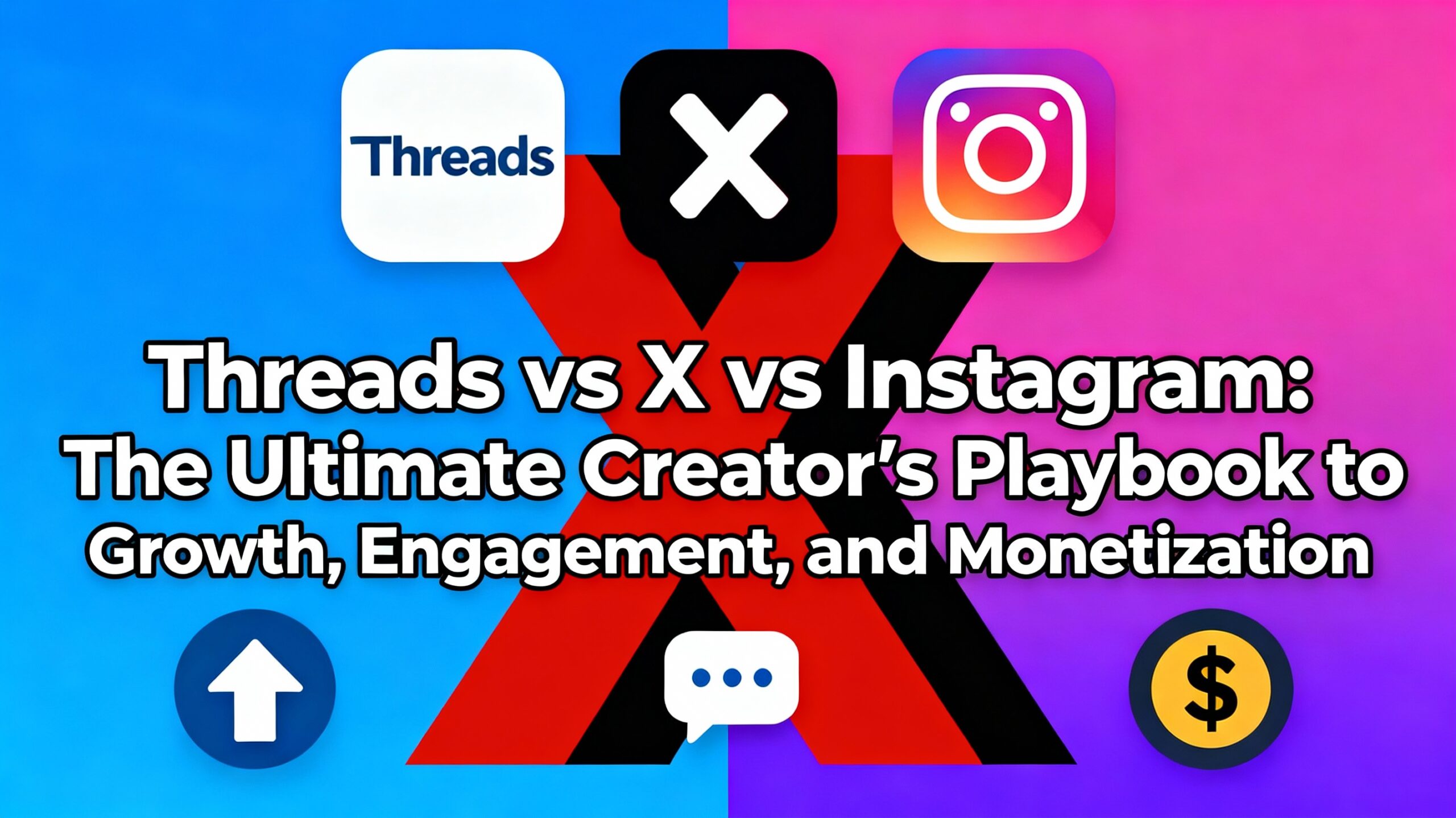
Threads has quickly become one of the most talked‑about “new generation” social networks, especially for creators who are tired of the pressure of Instagram and the chaos of X (formerly Twitter). Threads sits in a unique position between the two: it is text‑first and conversational like X, but deeply integrated with Instagram’s visual and community ecosystem. For creators, understanding how Threads truly differs from both X and Instagram is essential when deciding where to invest time, energy, and content strategy.
What Is Threads and Why It Matters
Threads is a text‑centric social platform developed by Meta and directly connected to Instagram accounts, allowing users to log in with their existing Instagram profiles and maintain the same username, verification, and social graph where possible. Unlike Instagram, which is built primarily around visuals, Threads emphasizes conversations, ideas, and real‑time interactions with support for text, images, videos, and links. It aims to offer a more relaxed, community‑oriented environment than X, with less focus on outrage and virality and more on meaningful engagement and creator–follower relationships.
For creators who already have an Instagram audience, Threads lowers the barrier to entry by allowing quick onboarding, familiar tools, and easy cross‑posting between the two platforms. At the same time, it attempts to differentiate itself from X by positioning as a calmer and safer place for discussion, with stronger moderation and a design that discourages toxic pile‑ons and aggressive discourse. This positioning makes Threads particularly attractive to brands, educators, niche experts, and lifestyle creators who want engagement without constant drama.
Threads vs X: The Core Concept
On the surface, Threads and X both look like microblogging platforms where users share short posts, reply, repost, and quote content. However, the user experience and underlying goals of each platform are quite different. Threads prioritizes community and longer‑form conversation, while X leans heavily into real‑time news, trending topics, and maximum reach.
Threads uses a feed that mixes people you follow with recommendations to help discovery, but the algorithm is tuned to be less news‑heavy and less politically charged than X, at least in its current phase. X, by contrast, is built around live events, breaking news, and viral spikes; it rewards hot takes, controversial opinions, and rapid posting during trending events. For creators, this means Threads tends to be better for depth and consistent engagement, whereas X is more oriented toward speed, virality, and public visibility.
Another conceptual difference lies in monetization and platform maturity. X is already far along in creator monetization through subscriptions, ad revenue sharing, and other programs. Threads, at the time of writing, is still relatively new and has limited native monetization tools, relying on brand deals, off‑platform products, and Instagram’s broader ecosystem for income opportunities. Creators must therefore see Threads more as a community‑building and engagement platform than a direct revenue engine—for now.
Feature Differences That Matter for Creators
From a practical standpoint, creators care about content formats, limits, and what kind of storytelling a platform allows. On this front, Threads and X differ in several important ways.
Threads allows posts up to 500 characters by default, giving more room for context, storytelling, and nuance compared to X’s standard 280‑character limit for non‑premium users. While X offers longer posts for paying subscribers, Threads’ higher limit is available to everyone, making it easier to post mini‑blog style updates, educational threads, and richer commentary without splitting content into many fragments.
Video support is also more generous on Threads for regular users. Threads supports video uploads up to around 5 minutes, whereas X limits free accounts to shorter clips and reserves long‑form uploads for paying users or certain tiers. For creators who share tutorials, breakdowns, or short podcasts, this advantage is significant, as it allows a more flexible mix of text and video within a single platform.
Threads also offers features such as clickable links, image carousels, GIF support, and voice notes with automatic transcription in some regions, which open more creative formats for storytelling and audience interaction. X similarly supports links, polls, Spaces (audio rooms), and long‑form content, but leans more into news, commentary, and live discussions such as Spaces for debates and event coverage. In practice, this means Threads is often used for “friendly” community posts, behind‑the‑scenes content, and educational mini‑threads, while X remains the default arena for real‑time commentary and public discourse.
Audience and Culture: Calm Niche vs Loud Public Square
Perhaps the biggest difference between Threads and X does not appear in the feature list but in the culture and behavior of users. X is widely recognized as a “public square,” where politicians, journalists, traders, activists, and meme accounts shape a fast‑moving feed that often feels chaotic and combative. Content that performs well on X tends to be punchy, polarizing, humorous, or news‑driven, rewarding creators who are comfortable posting hot takes multiple times a day.
Threads, by contrast, cultivated a more relaxed culture from its early days. Many brands, creators, and everyday users treat it as a place for casual thoughts, friendly exchanges, and community‑focused discussions rather than high‑stakes debates. Meme content still exists, but the norms lean toward positivity, support, and curiosity rather than confrontation. This different cultural tone affects how creators write, how often they post, and what they feel comfortable sharing.
For creators building a brand around education, lifestyle, wellness, or niche expertise, the calmer environment on Threads may be more suitable for nurturing loyal communities. Instead of chasing trends, Threads creators often prioritize consistent, value‑rich posts and conversations, knowing that their audience is less fragmented by constant breaking news. On X, the same creators may adapt their voice to match the platform’s atmosphere, focusing on shareable frameworks, strong opinions, or commentary on timely topics to stay visible.
Monetization: Direct vs Ecosystem‑Driven
Monetization is where X currently holds a clear lead for many creators. X offers several built‑in revenue options, such as ad revenue sharing for eligible creators, subscription features where followers pay monthly for exclusive content, and tipping or support features. For creators oriented toward content volume, audience scale, and engagement metrics, X can be a meaningful income channel—especially for those active in news, commentary, tech, and finance niches.
Threads, however, remains light on native monetization tools as of late 2026, with Meta focusing first on user growth, engagement, and integration with the broader Instagram and Facebook ad ecosystem. This does not mean there is no money to be made on Threads; rather, the revenue often flows indirectly. Creators can use Threads to:
- Nurture relationships that convert into paid coaching, consulting, or product sales off‑platform
- Drive traffic to newsletters, communities, or courses via clickable links
- Strengthen brand authority, making them more attractive for sponsorships and brand deals across all Meta platforms
In addition, creators who already monetize heavily through Instagram—via partnerships, product tags, or Reels bonuses where available—can use Threads to deepen engagement and keep their audience “warm” between visual posts. Over time, as Meta introduces more integrated monetization options such as ad partnerships connected to Instagram or cross‑platform campaigns, Threads may become a more direct revenue source, but for now, it is best seen as a top‑of‑funnel or retention tool.
Threads vs Instagram: Different Roles in the Funnel
For many creators, the real strategic question is not Threads vs X, but rather how Threads fits alongside Instagram in a multi‑platform strategy. Although Threads is part of the Instagram ecosystem, it plays a distinctly different role.
Instagram is visual‑first, optimized for polished photos, Reels, Stories, and shopping integrations. It is where creators build aspirational brands, showcase highlights, and leverage visual storytelling to attract and convert followers. The algorithm strongly favors engaging visuals and short‑form video, making production quality and creative editing critical factors.
Threads, on the other hand, is text‑first and conversation‑driven. It is positioned as a place where creators can relax the aesthetic pressure and focus on ideas, personal thoughts, and dialogues with the audience. This shift lowers the content production barrier: a creator can share daily lessons, behind‑the‑scenes insights, or spontaneous hot takes without needing a perfect photo or video to accompany every post.
Because the two platforms are integrated, creators can easily share Threads content to Instagram Stories or feed and vice versa, reinforcing their message across both text and visual touchpoints. A common pattern is:
- Use Instagram to attract attention with Reels, carousels, and high‑impact visuals.
- Use Threads to deepen the relationship with more detailed explanations, Q&A threads, and ongoing community conversations.
In marketing terms, Instagram plays a stronger role at the awareness and conversion stages, while Threads focuses on engagement and retention.
Content Strategy: How to Use Threads as a Creator
To get the most from Threads, creators should design a strategy that respects the platform’s culture and strengths instead of simply copying X or Instagram posts. Several practical approaches stand out.
First, Threads is ideal for micro‑blogging: posting short educational threads, frameworks, or story fragments that deliver clear value in one or two posts. For example, a marketing creator might share a 5‑step framework for improving click‑through rates, with each step explained in a single 500‑character post. A fitness creator could post a weekly “routine of the week” with clear, concise explanations and a call to reply with questions.
Second, Threads rewards conversational posting. Rather than broadcasting only, creators can ask questions, run casual polls, and reply actively to comments to build a sense of community. Because the environment is less combative than X, followers may feel more comfortable sharing experiences and feedback, giving creators richer insight into audience needs and content ideas.
Third, creators can repurpose content from longer formats. Key insights from a YouTube video, podcast episode, or long article can be turned into multiple stand‑alone Threads posts or short series. This strategy maximizes the value of existing content while keeping the Threads profile active without massive extra workload—especially useful for entrepreneurs juggling multiple platforms and projects.
Which Platform Is Better for Which Type of Creator?
No single platform is universally “best,” but certain creator profiles align more naturally with each.
Threads is particularly well‑suited for:
- Creators who already have an Instagram following and want to deepen engagement with minimal friction
- Educators, coaches, and consultants who share frameworks, insights, and reflections rather than viral memes
- Niche community builders who value calm, supportive interactions over intense public debates
X is better aligned with:
- News, tech, finance, politics, and commentary creators who thrive on real‑time events
- Meme accounts, satirists, and personalities comfortable with controversy and fast‑moving trends
- Creators seeking more direct monetization through platform‑native programs and willing to optimize for virality
Instagram remains the powerhouse for:
- Visual brands (fashion, travel, beauty, fitness, food, lifestyle) that rely on aesthetics and visual storytelling
- Product‑oriented creators who benefit from shopping tags, brand collabs, and Reels reach
- Creators who prefer to “show” more than “tell” in their content format
For many serious creators and entrepreneurs, the winning move is not choosing one platform but orchestrating a system: Instagram + Threads for community and brand, and optionally X for reach and real‑time relevance.
Practical Multi‑Platform Workflow for Creators
A pragmatic way to implement this as a creator is to design a simple workflow where each platform has a specific job. For example:
- Step 1 – Core content: Create a main piece of content (YouTube video, podcast, long article, or newsletter).
- Step 2 – Instagram: Turn the key hook or transformation into a Reel or carousel with strong visuals to attract attention.
- Step 3 – Threads: Break down the main ideas into several posts, ask questions, and invite discussion, using Threads to gather feedback and refine ideas.
- Step 4 – X (optional): Share the sharpest, most shareable insights as succinct posts optimized for virality, tagging relevant accounts or hashtags.
This approach reduces burnout by leveraging one main “pillar content” source while letting each platform express a different side of the creator’s brand.
Final Thoughts for Creators Choosing Between Threads, X, and Instagram
Threads, X, and Instagram each represent different philosophies of online presence for creators. X maximizes speed, reach, and real‑time relevance; Instagram maximizes visual impact and brand perception; Threads maximizes conversation depth and community warmth. For a creator deciding where to focus, the key questions are:
- Does the brand rely more on visuals, opinions, or conversations?
- Is the priority direct platform monetization or long‑term audience trust and relationship building?
- Where does the target audience currently spend more time and engage most authentically?
Creators looking to build a durable, high‑trust audience should strongly consider integrating Threads with their existing Instagram presence, using it as a low‑friction channel for daily insights, authentic conversations, and feedback loops. At the same time, those seeking large public reach and monetization opportunities may still lean into X, especially in commentary‑driven niches. The most resilient creator brands increasingly treat these platforms as complementary tools rather than competitors, using each for what it does best.
Related article : Cracking the Code: Your Free Guide to Skyrocketing Snapchat Followers
Would like to boost your marketing strategy ? Book a Free discovery call now