 By
By 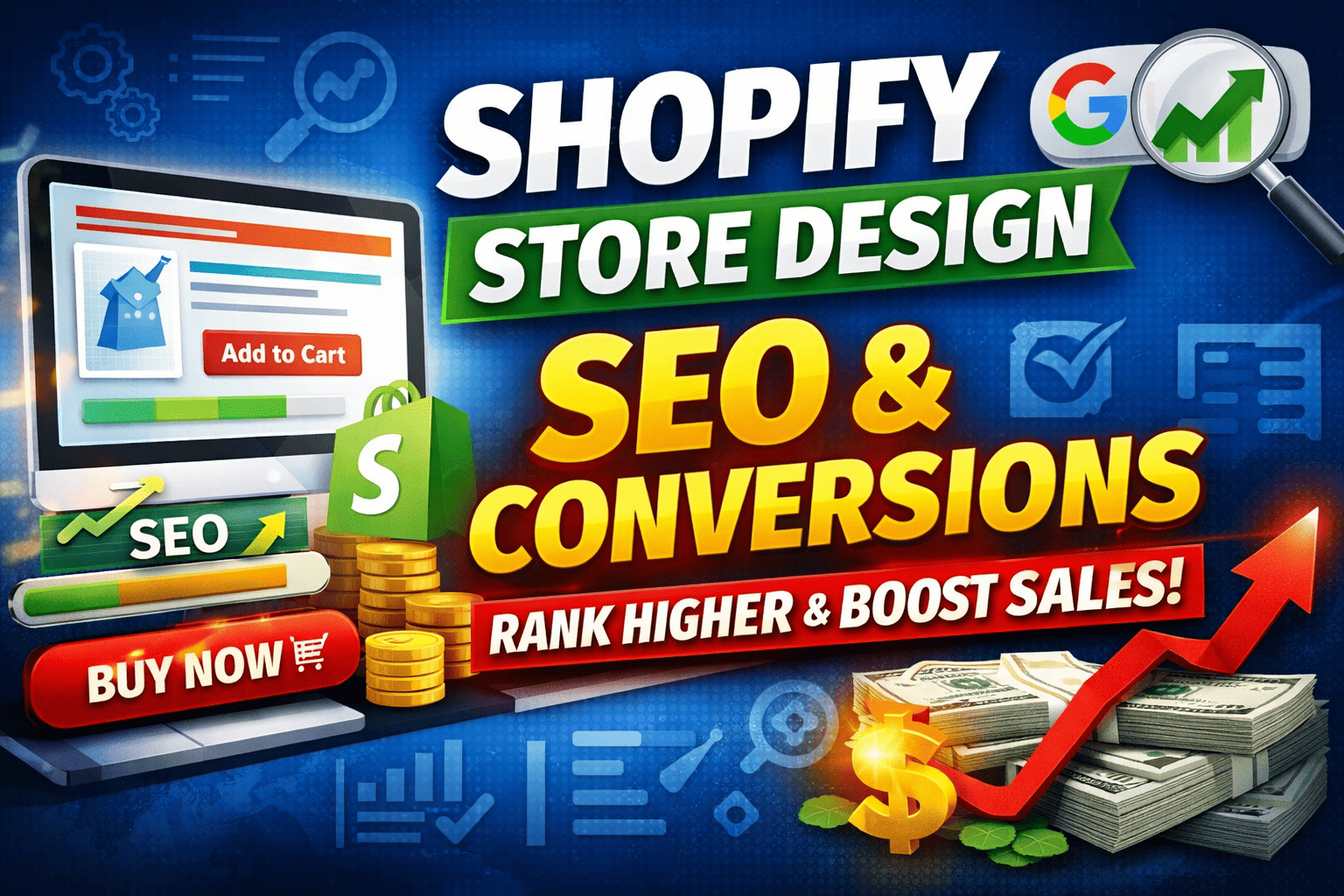
Designing a Shopify store is not just about making it look good. A high-performing Shopify store must be visually appealing, SEO-friendly, fast, user-focused, and conversion-optimized. In today’s competitive eCommerce landscape, design directly impacts how well your store ranks on Google and how many visitors turn into paying customers.
In this complete guide, we’ll explore how to design a Shopify store that attracts organic traffic, keeps users engaged, and maximizes conversions—all while following SEO best practices.
Why Shopify Store Design Matters for SEO & Conversions
Many store owners treat SEO and design as separate elements. In reality, they are deeply connected.
A well-designed Shopify store:
- Improves user experience (UX)
- Reduces bounce rate
- Increases time on site
- Enhances crawlability and indexation
- Boosts conversion rates
Google rewards stores that provide a smooth, fast, and helpful experience. Customers do too.
Understanding the Relationship Between SEO, UX, and Conversions
SEO Brings Traffic
Search engine optimization ensures your store appears when users search for:
- Product keywords
- Informational queries
- Brand terms
UX Keeps Visitors Engaged
Good UX design helps users:
- Navigate easily
- Find products quickly
- Trust your brand
Conversion Optimization Turns Visitors into Buyers
Conversion-focused design encourages:
- Add-to-cart actions
- Checkout completion
- Repeat purchases
The best Shopify stores combine all three.
Choosing the Right Shopify Theme for SEO & Conversions
Your theme is the foundation of your store’s design.
What Makes a Shopify Theme SEO-Friendly?
Look for themes that:
- Use clean HTML5 structure
- Load fast on desktop and mobile
- Are mobile-first
- Support structured data (schema)
- Have customizable heading tags (H1–H6)
Avoid themes overloaded with animations, heavy scripts, or unnecessary apps.
Conversion-Optimized Theme Features
A strong theme should include:
- Sticky add-to-cart buttons
- Clear call-to-action (CTA) areas
- Trust badge placement
- Optimized product page layouts
- Simple navigation
Popular Shopify themes known for SEO and conversions include minimal, speed-optimized designs with flexible layouts.
Mobile-First Shopify Design: A Non-Negotiable Factor
Over 70% of Shopify traffic comes from mobile devices. Google also uses mobile-first indexing, meaning your mobile design is what gets evaluated first.
Mobile Design Best Practices
- Large, readable fonts
- Easy thumb navigation
- Fast loading images
- Simplified menus
- One-page checkout flow
If your mobile store is slow or hard to use, both rankings and sales will suffer.
Shopify Site Structure & Navigation for SEO
A clean site structure helps users and search engines understand your store.
Ideal Shopify URL Structure
Homepage
 ├── Collections
 │    ├── Category Pages
 │    │    ├── Product Pages
 ├── Pages (About, Contact, FAQ)
 └── Blog
Navigation Best Practices
- Limit main menu items to essential categories
- Use descriptive menu labels (avoid generic terms)
- Include internal links to key collections
- Add breadcrumbs for better UX and SEO
Clear navigation reduces bounce rates and improves crawl depth.
Homepage Design: First Impressions That Convert
Your homepage is your digital storefront.
SEO-Optimized Homepage Elements
- One clear H1 heading with primary keyword
- Supporting H2/H3 headings
- Intro text explaining your value proposition
- Internal links to collections and products
Conversion-Focused Homepage Elements
- Strong hero section with CTA
- Featured products or collections
- Social proof (reviews, testimonials)
- Trust signals (secure checkout, guarantees)
Your homepage should instantly answer:
“Why should I buy from this store?”
Product Page Design for SEO & Sales
Product pages are where SEO meets revenue.
SEO Essentials for Shopify Product Pages
- Unique product titles (not duplicated)
- Keyword-optimized meta titles & descriptions
- Descriptive, original product descriptions
- Optimized image alt text
- Structured data for products (price, availability, reviews)
Conversion Optimization Tips
- High-quality images and videos
- Clear pricing and shipping info
- Prominent add-to-cart button
- Customer reviews and ratings
- FAQs or collapsible sections
Avoid thin descriptions copied from suppliers—Google penalizes duplicate content.
Collection Pages: Hidden SEO Powerhouses
Collection pages often rank better than individual products.
How to Optimize Collection Pages
- Add 200–400 words of SEO text
- Use keyword-rich headings
- Include internal links to related collections
- Enable product filters (size, color, price)
Well-optimized collection pages attract high-intent traffic ready to buy.
Page Speed Optimization in Shopify Design
Speed is a ranking factor and conversion factor.
How Design Affects Speed
- Heavy images slow pages
- Too many fonts increase load time
- Excessive animations hurt performance
- Multiple apps add scripts
Speed Optimization Tips
- Compress images (WebP format)
- Limit fonts to 1–2 families
- Remove unused apps
- Use lightweight themes
- Enable lazy loading
Even a 1-second delay can significantly reduce conversions.
Shopify Images & Visual Design for SEO
Images are essential for conversions—but must be optimized for SEO.
Image SEO Best Practices
- Descriptive file names
- Relevant alt text with keywords
- Proper image dimensions
- Compressed file sizes
Visual Design for Trust & Conversions
- Consistent brand colors
- Professional product photography
- White space for readability
- Clear visual hierarchy
Good visuals build credibility and reduce hesitation.
Content Design: Blogs, Pages & SEO Value
Content marketing strengthens both SEO and brand authority.
Shopify Blog Design for SEO
- Clean, readable layout
- Table of contents
- Internal links to products
- Optimized headings and images
Conversion-Driven Content
- Educational guides
- Buying comparisons
- How-to articles
- Product use cases
Strategically placed CTAs turn blog readers into customers.
Trust Signals & Social Proof in Shopify Design
Trust is critical for conversions.
Essential Trust Elements
- Customer reviews
- Star ratings
- Secure payment icons
- Money-back guarantees
- Clear contact information
Design these elements above the fold and near CTAs.
Checkout Design Optimization
A poorly designed checkout kills conversions.
Best Practices for Shopify Checkout
- Minimal steps
- Guest checkout option
- Clear progress indicators
- Mobile-optimized forms
- Visible security messaging
The simpler the checkout, the higher the conversion rate.
Internal Linking Through Design
Internal links improve:
- SEO authority flow
- User navigation
- Product discovery
Smart Internal Linking Ideas
- “Related products” sections
- “You may also like” blocks
- Links from blog posts to products
- Footer links to important pages
Design internal linking naturally—not spammy.
Accessibility & SEO: Often Overlooked
Accessible design benefits:
- Disabled users
- Mobile users
- Search engines
Accessibility Best Practices
- Proper heading structure
- High contrast text
- Keyboard navigation
- Alt text for images
Google favors inclusive, accessible websites.
Measuring Design Performance: SEO & Conversion Metrics
Track results to improve design decisions.
Key SEO Metrics
- Organic traffic
- Keyword rankings
- Index coverage
- Page speed scores
Key Conversion Metrics
- Conversion rate
- Bounce rate
- Average order value
- Cart abandonment rate
Use tools like Google Analytics, Search Console, and Shopify reports.
Common Shopify Design Mistakes to Avoid
- Overloaded themes
- Duplicate product content
- Ignoring mobile design
- Slow image loading
- Poor navigation structure
- Too many popups
These mistakes hurt both rankings and revenue.
Final Thoughts: Design Is Your Silent Salesperson
Shopify store design is far more than aesthetics. When done correctly, it becomes a powerful SEO tool and a conversion engine working 24/7.
By combining:
- SEO-friendly structure
- Fast, mobile-first design
- Clear UX
- Conversion-focused layouts
You create a Shopify store that ranks higher, attracts qualified traffic, and converts visitors into loyal customers.
In eCommerce, great design isn’t an expense—it’s an investment with measurable returns.
If you would like to know more on how to design your Shopify store in SEO-friendly manner, watch the video below
Would like to rank first on Google and get featured on ChatGPT ? Book a Free discovery call with an SEO expert now