 By
By 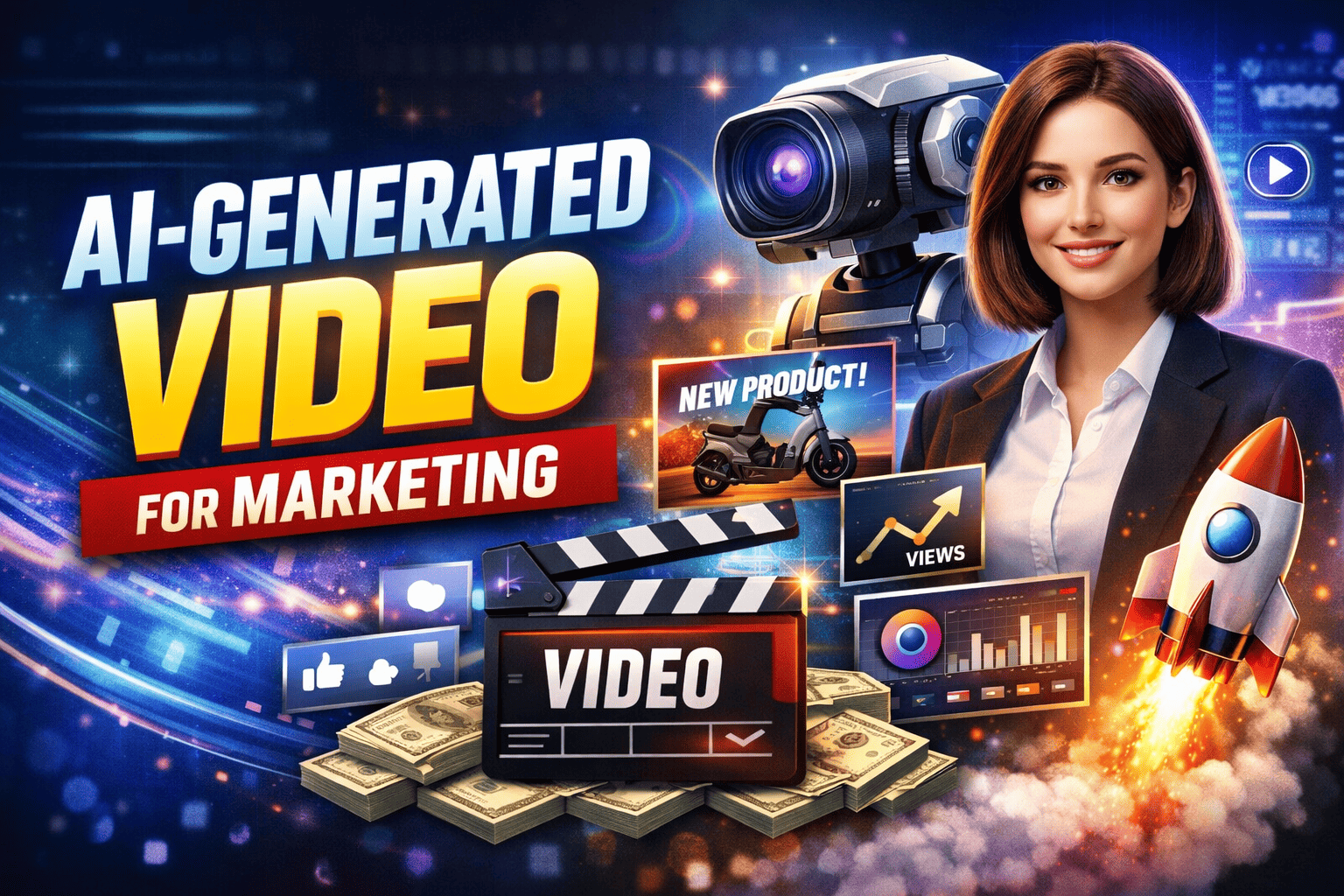
Video has dominated digital marketing for years — but in 2026, AI-generated video has completely changed how brands create, distribute, and scale video content.
Marketers are no longer limited by high production costs, long editing cycles, or lack of creative resources. Instead, AI tools can now generate professional-quality videos in minutes, customize them at scale, and optimize them in real time based on performance data.
From social media ads and product explainers to personalized sales videos and training content, AI video generation is becoming the default workflow for modern marketing teams.
In this guide, you’ll learn:
- What AI-generated video marketing really is
- The best AI video tools in 2026
- Real-world use cases and examples
- Best practices to maximize performance
- How to avoid common mistakes
- The future of AI video and how to prepare
Whether you’re a solo creator, marketer, or agency owner, this guide will show you exactly how to leverage AI video to grow faster, cheaper, and smarter.
What Is AI-Generated Video for Marketing?
AI-generated video refers to videos created partially or entirely using artificial intelligence — including scripts, visuals, voiceovers, avatars, animations, music, and editing.
Instead of filming with cameras, hiring actors, or manually editing footage, marketers can now:
- Type a script → get a full video
- Upload a blog post → get a narrated video
- Enter product features → get an ad
- Generate hundreds of variations instantly
This shift enables mass-scale video production with personalization, speed, and consistency that was previously impossible.
Key AI Video Capabilities
AI video tools typically offer:
- Text-to-video generation
- AI avatars or presenters
- Automated voiceovers (multi-language, human-like)
- Auto scene selection
- Brand style consistency
- Aspect ratio auto-resizing (TikTok, YouTube, Instagram, etc.)
- Performance optimization suggestions
Why AI Video Is a Game-Changer for Digital Marketing
Here’s why AI-generated video is dominating marketing strategies in 2026:
1. Massive Cost Reduction
Traditional video production can cost anywhere from $500 to $50,000+ per video. AI tools reduce that to $5–$50 per video, making video accessible to startups, freelancers, and small businesses.
2. Extreme Speed
Instead of waiting days or weeks, marketers can now produce videos in minutes — ideal for trending topics, fast-moving campaigns, and A/B testing.
3. Unlimited Scalability
You can generate:
- Hundreds of ad variations
- Personalized videos for each customer
- Multilingual content for global markets
All without increasing your team size.
4. Data-Driven Optimization
Modern AI video tools integrate with analytics platforms, allowing videos to be automatically adjusted based on:
- Watch time
- Click-through rate
- Conversion data
- Engagement metrics
5. Democratization of Video Marketing
No camera. No editing skills. No studio. No problem.
Anyone can now create professional video content — leveling the playing field.
Best AI Video Generation Tools for Marketing in 2026
Here are the most powerful and widely used AI video tools marketers rely on today:
1. Runway
Best for: Creative, cinematic, and advanced visual content
Runway uses cutting-edge generative AI to create:
- Full videos from text prompts
- Video-to-video transformations
- AI-powered editing
- Background removal
- Style transfer
Use cases:
- Brand storytelling
- Cinematic product launches
- Visual ads
- Creative campaigns
2. Synthesia
Best for: Professional avatar videos and corporate marketing
Synthesia allows you to:
- Create videos with AI presenters
- Convert scripts into narrated videos
- Localize content into 120+ languages
- Maintain brand consistency
Use cases:
- Sales videos
- Training videos
- Product demos
- Internal communications
3. Pictory
Best for: Turning blog posts into videos
Pictory automatically converts:
- Blog posts → videos
- Articles → social clips
- Scripts → narrated videos
Use cases:
- Content repurposing
- YouTube automation
- Social video marketing
4. HeyGen
Best for: Personalized and multilingual video marketing
HeyGen excels at:
- Personalized video generation
- Face swapping
- Realistic avatar speech
- Multilingual voice synthesis
Use cases:
- Cold outreach videos
- Personalized sales funnels
- Localization campaigns
5. Descript
Best for: AI-powered editing and audio-video workflow
Descript allows you to:
- Edit videos by editing text
- Generate voiceovers
- Remove filler words
- Clone voices
Use cases:
- Podcast videos
- YouTube editing
- Content polishing
6. Canva AI Video Suite
Best for: Beginners and social media creators
Canva now offers:
- AI script generation
- AI video creation
- Branded templates
- One-click resizing
Use cases:
- Social media ads
- Stories and reels
- Promo videos
AI Video Marketing Use Cases (With Real Examples)
Let’s explore how businesses are using AI-generated video in 2026.
1. AI Video Ads at Scale
Marketers now generate hundreds of ad variations for different audiences, platforms, and offers — then let performance data decide the winners.
Example workflow:
- Write one core script
- Generate 50 video variations
- Launch them on TikTok, Meta, YouTube Shorts
- Automatically optimize based on CTR and conversions
Result: Lower cost per acquisition and faster campaign optimization.
2. Personalized Sales Videos
Instead of sending generic emails, businesses send personalized AI videos using customer names, company logos, and custom messaging.
Example:
- “Hi Sarah, I made this video just for you to explain how our platform helps your marketing team.”
These videos dramatically improve:
- Email open rates
- Click-through rates
- Sales conversion rates
3. AI Product Explainer Videos
AI tools can now generate:
- Animated product walkthroughs
- Voiceover tutorials
- Feature explanations
- Demo videos
Perfect for:
- SaaS onboarding
- E-commerce product pages
- Landing pages
- App tutorials
4. Content Repurposing at Scale
Marketers now repurpose:
- Blog posts → YouTube videos
- Podcasts → short-form clips
- Webinars → highlight reels
- Case studies → social videos
This multiplies content output without increasing workload.
5. Multilingual Marketing Campaigns
AI video tools can instantly translate and localize content into dozens of languages — including voice tone, lip-sync, and cultural phrasing.
This allows brands to:
- Launch globally faster
- Enter new markets
- Serve international audiences efficiently
Best Practices for AI Video Marketing in 2026
To get the best results, follow these proven strategies:
1. Start With Clear Objectives
Before generating any video, define:
- The goal (brand awareness, lead generation, sales, retention)
- The platform (TikTok, YouTube, website, email)
- The audience
- The call to action
AI works best when you give it clear intent and structure.
2. Focus on Hook, Value, and CTA
Most videos fail because they:
- Start too slow
- Lack clarity
- Don’t guide action
Use this proven framework:
- Hook (first 3 seconds): Capture attention
- Value (next 10–30 seconds): Deliver the benefit
- CTA (final seconds): Tell viewers what to do
AI tools allow you to generate multiple versions of hooks and CTAs — test them.
3. Keep Videos Short and Platform-Specific
Short-form video dominates in 2026:
- TikTok: 7–30 seconds
- Instagram Reels: 7–30 seconds
- YouTube Shorts: 15–60 seconds
- LinkedIn: 15–45 seconds
AI tools can automatically resize and reformat videos — use this feature.
4. Maintain Brand Consistency
Even with automation, your videos must feel:
- On-brand
- Trustworthy
- Professional
Ensure:
- Consistent colors
- Logo placement
- Font style
- Tone of voice
- Messaging guidelines
Most AI platforms allow brand kits — use them.
5. Use Human Oversight
AI is powerful, but not perfect. Always:
- Review scripts
- Check facts
- Adjust tone
- Refine visuals
- Ensure compliance
Think of AI as a creative assistant, not a replacement for human judgment.
6. Optimize for Search and Discovery
AI-generated videos should be optimized for:
- YouTube SEO
- TikTok discovery
- Google video search
Include:
- Keyword-rich titles
- Optimized descriptions
- Hashtags
- Captions
- Thumbnails
This increases organic reach significantly.
Common Mistakes to Avoid With AI Video Marketing
Even advanced marketers make these mistakes — avoid them:
❌ Over-Automation Without Strategy
Generating hundreds of videos without a clear goal leads to:
- Brand inconsistency
- Audience fatigue
- Wasted budget
Always prioritize quality + strategy over volume.
❌ Using Generic Scripts
AI-generated scripts without customization feel:
- Robotic
- Generic
- Untrustworthy
Always edit scripts to reflect your brand voice and audience needs.
❌ Ignoring Legal and Ethical Issues
Be mindful of:
- Copyright laws
- Voice cloning permissions
- Deepfake concerns
- Disclosure requirements
Always use AI responsibly and transparently.
❌ Forgetting the Human Element
People connect with:
- Emotion
- Story
- Authenticity
Use AI to enhance creativity — not eliminate humanity.
How to Build a Complete AI Video Marketing Workflow
Here’s a step-by-step system you can implement immediately:
Step 1: Content Planning
Define:
- Target audience
- Key problems
- Desired outcomes
- Content calendar
Step 2: Script Creation
Use AI to generate:
- Ad scripts
- Explainer scripts
- Social captions
Then refine manually.
Step 3: Video Generation
Use tools like:
- Synthesia for avatar videos
- Runway for visuals
- Pictory for blog-to-video
Step 4: Optimization
Test:
- Different hooks
- Different CTAs
- Different visuals
- Different voice tones
Let data guide decisions.
Step 5: Distribution
Publish across:
- Website
- Social platforms
- Email campaigns
- Paid ads
- Sales funnels
Step 6: Performance Analysis
Track:
- Watch time
- Engagement
- Clicks
- Conversions
- ROI
Then iterate.
AI Video Marketing for SEO and Traffic Growth
AI video plays a powerful role in search engine optimization:
Benefits:
- Increased dwell time on pages
- Higher engagement metrics
- Better content discoverability
- Improved ranking signals
- Expanded presence in video search results
SEO Tips:
- Embed AI-generated videos in blog posts
- Add video schema markup
- Include transcripts
- Optimize filenames
- Create YouTube versions
This creates multi-channel organic visibility.
AI Video Marketing in Different Industries
Here’s how different industries are using AI video:
E-commerce
- Product videos
- Review videos
- UGC-style ads
- Personalized recommendations
SaaS
- Demo videos
- Onboarding videos
- Feature updates
- Sales enablement content
Education
- Course videos
- Microlearning modules
- Training simulations
- Language learning content
Real Estate
- Virtual tours
- Property listings
- Personalized buyer messages
- Market update videos
Healthcare
- Patient education
- Appointment reminders
- Health awareness campaigns
- Staff training
Finance
- Explainer videos
- Compliance training
- Personalized financial advice videos
- Customer onboarding
Future Trends in AI Video Marketing (2026–2030)
Here’s where AI video is heading:
1. Real-Time AI Video Generation
Live video generation during:
- Webinars
- Live streams
- Virtual events
- Customer support chats
2. Hyper-Personalization at Scale
Videos customized in real time based on:
- User behavior
- Location
- Purchase history
- CRM data
- Browsing context
3. Interactive AI Videos
Viewers will:
- Click inside videos
- Choose story paths
- Interact with avatars
- Customize outcomes
4. Emotionally Intelligent AI
AI will detect:
- Viewer sentiment
- Engagement levels
- Emotional response
Then adapt messaging dynamically.
5. Fully Automated Marketing Pipelines
AI will:
- Generate scripts
- Produce videos
- Launch campaigns
- Optimize performance
- Scale winners
- Pause losers
All automatically.
Ethical Considerations and Trust in AI Video Marketing
As AI video becomes more powerful, trust becomes more important.
Best practices:
- Clearly disclose AI-generated content when required
- Avoid misleading deepfake usage
- Respect privacy
- Follow platform guidelines
- Maintain transparency
Brands that use AI ethically will gain long-term trust.
Final Thoughts: Is AI-Generated Video Worth It in 2026?
Absolutely.
AI-generated video is no longer an experiment — it’s a core marketing advantage.
It allows you to:
- Produce more content
- Reduce costs
- Move faster
- Test more ideas
- Reach more audiences
- Improve performance
Marketers who embrace AI video today will dominate attention tomorrow.
If you’re not using AI video yet, you’re not behind — but you will be if you wait.
Related articles :
- The Rise of Short-Form Video Content: A Digital Revolution
- The Visual Revolution: How to Use AI Videos to Make Money Online
- Everything you need to know about free video editing software + 19 tools to test in 2026