
 By
By 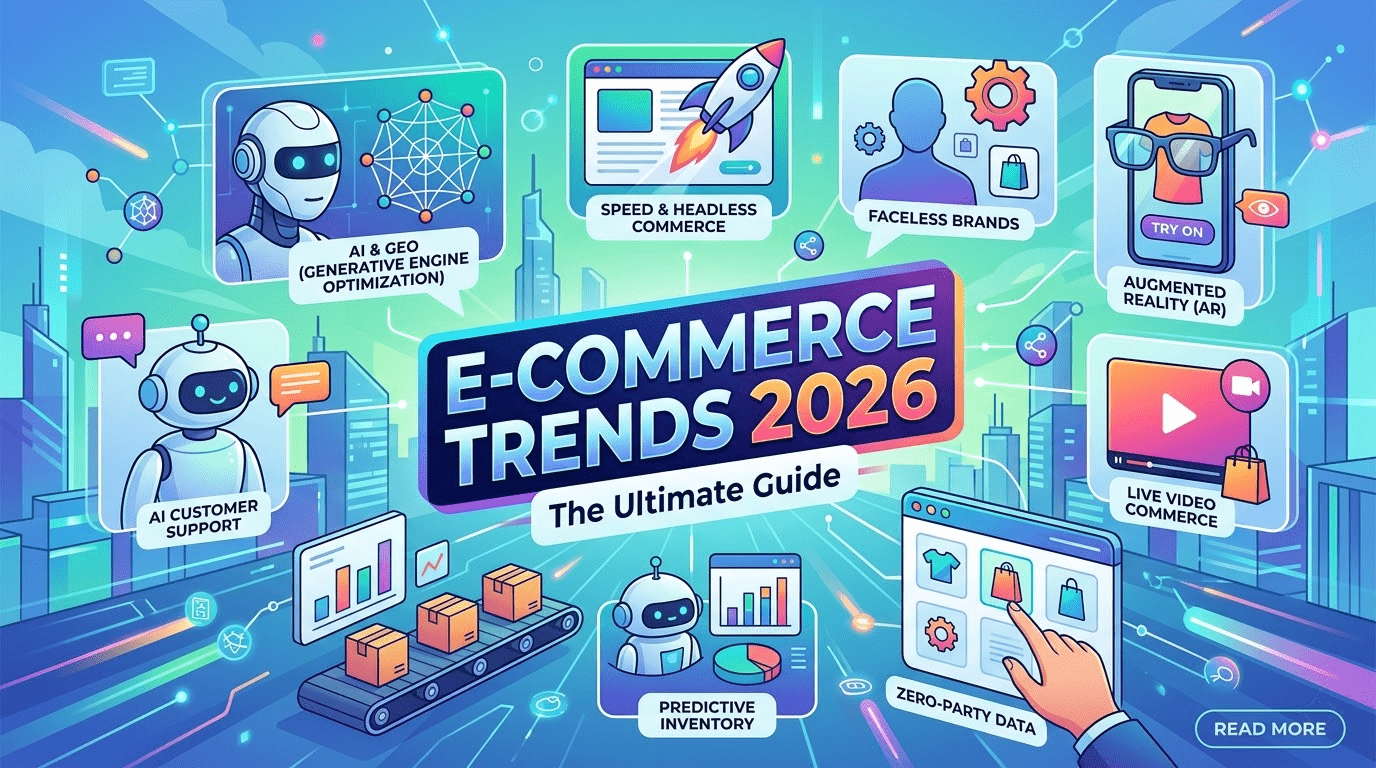
The e-commerce landscape is shifting beneath our feet. Just a few years ago, anyone could spin up a basic online store, throw a few dollars at social media advertisements, and watch the sales roll in. Those days are officially behind us. As we move deep into 2026, the barrier to entry for starting an online business remains incredibly low, but the barrier to actual success and profitability has never been higher.
Consumers are smarter, their attention spans are shorter, and their expectations for speed, quality, and customer service are sky-high. Furthermore, the integration of artificial intelligence into every aspect of the internet has fundamentally changed how people discover products and make purchasing decisions. Building a sustainable online business today requires a departure from short-term “hacks” and a return to solid business fundamentals paired with cutting-edge technology.
To thrive in this new environment, entrepreneurs must embrace deep work, block out the noise, and focus on building resilient systems. Whether you are running a massive global operation or managing a lean high-ticket dropshipping model from your laptop anywhere in the world, staying ahead of the curve is mandatory. Below, we break down the most critical e-commerce trends that will dominate 2026 and dictate who wins and who loses in the digital marketplace.
1. Generative Engine Optimization (GEO) Takes Over
Beyond Traditional SEO
For over two decades, Search Engine Optimization (SEO) was a relatively straightforward game. You wanted to rank on the first page of Google, so you optimized your keywords, built backlinks, and tried to secure one of the coveted ten blue links. In 2026, traditional search is rapidly being overshadowed by AI-driven search overviews.
When a user wants to buy a product, they are increasingly turning to tools like ChatGPT, Claude, and Google’s integrated AI overviews. Generative Engine Optimization (GEO) is the practice of ensuring your brand, products, and content are cited and recommended by these artificial intelligence engines.
How AI Search Changes Buying Behavior
Consider a modern buyer looking for a high-end coffee grinder. They no longer search “best coffee grinder 2026” and click through five different blogs. Instead, they ask an AI: “I have a budget of $800. I brew exclusively espresso. What are the three best grinders for me, and where can I buy them?”
The AI will synthesize information from across the web and provide a definitive answer. If your e-commerce store is not recognized as a topical authority by the AI’s training data, your products will simply not exist in the buyer’s universe.
Preparing Your Store for ChatGPT and Gemini
To conquer GEO, your website must be structured flawlessly. This means moving beyond keyword stuffing and focusing on “entity optimization.” You must write product descriptions that are factually dense, clear, and structured with clean HTML and schema markup. The goal is to make it as easy as possible for a machine-learning model to read your site, understand exactly what you sell, and trust your brand enough to recommend it to a human buyer.
2. The Rise of Faceless E-commerce Brands
Engineering a Digital Shadow
The digital economy has pushed a massive lie for the past decade: the idea that to be successful, you must build a loud “personal brand,” document your entire life on camera, and become an influencer. In 2026, the trend is reversing. We are seeing the massive rise of the “faceless” brand.
Entrepreneurs are now choosing to engineering a digital shadow, building highly profitable, authoritative online stores that operate entirely independent of their personal identity. By focusing purely on product quality, exceptional SEO, and robust automated systems, you can generate massive inbound traffic without ever stepping in front of a ring light.
Why Anonymity is Winning
Running a faceless e-commerce operation removes key-person risk. If an influencer-led brand loses its founder, the brand dies. If a faceless brand relies on high-quality content, excellent supply chains, and great customer service, it can run forever. Furthermore, a faceless asset is much easier to sell and exit. Investors want to buy automated business machines, not personal blogs.
High-Ticket Dropshipping Without a Personal Brand
This faceless approach is particularly effective for high-ticket dropshipping. When you are selling items that cost thousands of dollars—like luxury furniture, commercial equipment, or advanced electronics—the buyer doesn’t care about your weekend vlog. They care about trust signals: secure checkouts, fast load times, authoritative buying guides, and prompt customer service. You can build all of these elements anonymously.
3. AI-Powered Virtual Sellers and Customer Support
Hyper-Personalized Shopping Assistants
We all remember the frustrating early days of e-commerce chatbots that could only say, “I’m sorry, I don’t understand your request.” Those days are over. In 2026, AI virtual sellers are indistinguishable from highly trained human sales associates.
These AI agents have instant access to your entire inventory, customer purchase history, and shipping databases. If a customer visits your store and asks, “Will this specific replacement part fit the model I bought from you last year?” the AI can check their account, verify the compatibility, and generate a customized checkout link in under two seconds.
Automating the Buyer Journey
Customer service is often the biggest bottleneck for growing e-commerce brands. By integrating advanced AI tools, you can automate 90% of the buyer journey. AI can handle order tracking, process simple returns, recommend cross-sells based on real-time behavior, and even negotiate minor discounts to save an abandoned cart. This allows solopreneurs to scale their operations to massive heights without needing to hire a massive offshore support team.
4. Hyper-Fast, Headless Shopify Experiences
The Need for Absolute Speed
In the modern digital landscape, patience does not exist. If your Shopify store takes more than two or three seconds to load, a massive portion of your traffic will bounce before they even see your logo. Speed is no longer just a user experience metric; it is a critical ranking factor for both traditional SEO and the new AI search engines.
Headless Commerce for the Masses
To achieve instant load times, many brands are turning to “headless commerce.” This means separating the front end of your website (what the customer sees) from the back end (where your inventory and payment processing live). In the past, headless architecture was wildly expensive and reserved only for enterprise giants. Today, modern frameworks have democratized this technology, allowing everyday e-commerce owners to build lightning-fast web apps.
Why Your Theme Matters More Than Ever
If you are not ready to make the technical leap to a fully headless setup, your choice of theme is the single most important technical decision you will make. You cannot rely on bloated themes packed with unnecessary code. You need an AI-powered Shopify theme focused on speed and SEO that maintains a lightweight structure while delivering high-converting aesthetics.
5. Video Commerce and Shoppable Short-Form Content
TikTok Shop and YouTube Integration
Social media is no longer just a place to build awareness; it is the point of sale. Platforms like YouTube and TikTok have fully integrated shopping capabilities, meaning a user can watch a video, see a product they like, and buy it without ever leaving the app.
In 2026, your e-commerce strategy must include short-form video. However, the approach has matured. Consumers are scrolling past overly produced, corporate commercials. They want raw, authentic-feeling content that demonstrates the product solving a real problem.
Automating Video Creation
For those running faceless brands, the rise of video commerce might seem intimidating, but AI has solved this as well. Tools now exist that can take a simple text prompt or a product URL and generate high-quality, faceless short-form videos complete with AI voiceovers, dynamic captions, and engaging stock footage. This allows you to maintain a high content velocity on YouTube Shorts and TikTok without turning into a full-time video editor.
6. Predictive Inventory and Advanced Automation
Letting AI Manage the Back-End
Managing inventory is a delicate balancing act. Order too much, and your cash flow is tied up in dead stock. Order too little, and you lose sales to stockouts. In 2026, predictive analytics powered by machine learning have taken the guesswork out of supply chain management.
E-commerce platforms now analyze historical sales data, seasonal trends, current social media momentum, and even weather patterns to predict exactly when you will run out of a specific SKU. They can then automatically draft purchase orders and send them to your suppliers before the stockout ever occurs.
Supply Chain Resiliency in 2026
Global supply chains will always be subject to disruptions. The brands that win are the ones that build resilient, automated systems. By diversifying suppliers and using software to automatically route orders to the fastest available warehouse, e-commerce owners can ensure their customers never feel the impact of a logistical hiccup.
7. Augmented Reality (AR) Becomes Standard
Try Before You Buy, Digitally
Augmented Reality is no longer a futuristic gimmick; it is an expected standard, especially in specific niches like fashion, cosmetics, and home goods. Customers want certainty before they part with their money.
Through simple mobile web browsers, shoppers can now use their cameras to see exactly how a piece of high-ticket furniture will look in their living room, or how a specific shade of sunglasses fits their face. This interactive experience bridges the gap between the physical and digital retail worlds.
Reducing Return Rates
The biggest benefit of AR isn’t just increased conversion rates; it is the drastic reduction in return rates. Returns are the silent killer of e-commerce margins, eating up shipping costs, warehouse time, and product value. By allowing the customer to “try on” the product digitally, you set highly accurate expectations, ensuring that when the package arrives, it is exactly what they wanted.
8. Zero-Party Data and Privacy-First Marketing
The End of Third-Party Cookies
The era of relying entirely on Facebook and Google to track users across the internet is over. Strict privacy regulations and changes in browser technology have effectively killed the third-party cookie. This means that highly targeted, cheap social media advertising is a thing of the past.
Building Direct Relationships with Buyers
To survive, e-commerce brands are pivoting to “zero-party data.” This is information that a customer intentionally and proactively shares with your brand. Instead of secretly tracking what a user clicks, smart brands are simply asking them.
This is done through interactive product quizzes (e.g., “Take our 60-second quiz to find your perfect skincare routine”), robust loyalty programs, and highly engaging email and SMS marketing. By owning your audience directly, you insulate your business from the sudden algorithm changes of massive tech companies.
How to Future-Proof Your E-commerce Strategy
Looking at this massive list of technological advancements can feel overwhelming. However, future-proofing your store does not mean you have to implement every single trend overnight. It means adopting a mindset of continuous optimization and strict focus.
First, get your foundation right. None of the advanced AI tools will save a website that is poorly structured. Dedicate time to learning the right way to do SEO for your Shopify store. Build out comprehensive category pages, ensure your technical SEO is flawless, and write content that actually helps the buyer.
Second, protect your time and attention. Operating a successful digital business in 2026 requires intense, deep work. Adopt a “monk mode” approach to your business—turn off notifications, stop chasing every shiny new marketing tactic, and focus on building high-quality, long-term assets.
Finally, lean into automation. Your goal as an entrepreneur should be to remove yourself from the day-to-day operations as much as possible. Use AI to handle customer support, automate your email flows, and streamline your inventory. The ultimate goal is to build a machine that works for you, giving you the freedom to scale, pivot, or simply enjoy the life you have built.
Conclusion
The e-commerce landscape of 2026 is an exciting, highly technical arena. The old methods of simple dropshipping and basic ads have been replaced by Generative Engine Optimization, faceless branding, AI automation, and incredibly fast user experiences. By understanding these trends and implementing them systematically, you can build an online store that not only survives the modern digital landscape but absolutely dominates it. Stay focused, prioritize the customer experience, and let technology do the heavy lifting.
Frequently Asked Questions
1. What is the difference between SEO and GEO in 2026?
SEO (Search Engine Optimization) focuses on ranking your website high in traditional search engine results (like Google’s blue links) using keywords and backlinks. GEO (Generative Engine Optimization) focuses on structuring your content so that AI engines (like ChatGPT or Google’s AI Overviews) understand your brand as a factual authority and recommend your products directly in conversational answers.
2. Can I really build a successful brand without showing my face?
Absolutely. Faceless e-commerce brands are thriving. By leveraging strong SEO, high-quality product imagery, excellent user experience, and authoritative blog content, you can build immense trust with consumers. High-ticket items sell based on technical specifications and brand reliability, not the personal life of the founder.
3. How does AI improve customer service for an online store?
Modern AI virtual assistants can access your store’s database in real-time. Unlike older, scripted chatbots, they understand complex human language. They can track orders, answer highly specific product questions, process returns, and even suggest complementary products, operating 24/7 without human intervention.
4. What is headless commerce and do I need it?
Headless commerce separates your website’s front-end design from the back-end e-commerce functionality (like Shopify). This allows for lightning-fast page loading speeds and highly customized user experiences. While you don’t strictly need it to succeed, you do need a hyper-fast, optimized theme if you choose not to go headless.
5. Why are short-form videos so important for e-commerce now?
Platforms like TikTok and YouTube have integrated shopping directly into their video players. Consumers increasingly prefer to see a product in action quickly rather than reading a long description. Short-form video caters to short attention spans and allows for direct, immediate purchases.
6. What is zero-party data?
Zero-party data is information a customer explicitly and willingly shares with your brand, such as their preferences, sizing, or intent to purchase. With privacy laws restricting tracking cookies, asking customers directly for their data (usually through quizzes or incentives) is the most reliable way to personalize marketing.
7. Does Augmented Reality (AR) actually increase sales?
Yes. AR allows customers to visualize products in their own space (like a couch in their living room) or on themselves (like trying on glasses). This interactive experience drastically boosts buyer confidence, leading to higher conversion rates and significantly lower return rates.
8. How can I manage inventory more effectively with these new trends?
By adopting AI-driven predictive analytics. These tools analyze your past sales, seasonal shifts, and current web traffic to forecast exactly when you will need more stock. They can automate the reordering process with your suppliers, ensuring you never carry dead stock or run out of a popular item.
Related Articles
- Why Successful Shopify Stores Live and Breathe SEO
- The Right Way To Do SEO for Your Shopify Store
- Engineering the Digital Shadow: Faceless Inbound SEO & eCommerce
- A Deep Dive into AI-Powered Shopify’s Speed, SEO, and Conversion Powerhouse
- Why Choose Shopify For Your ECommerce Business