 By
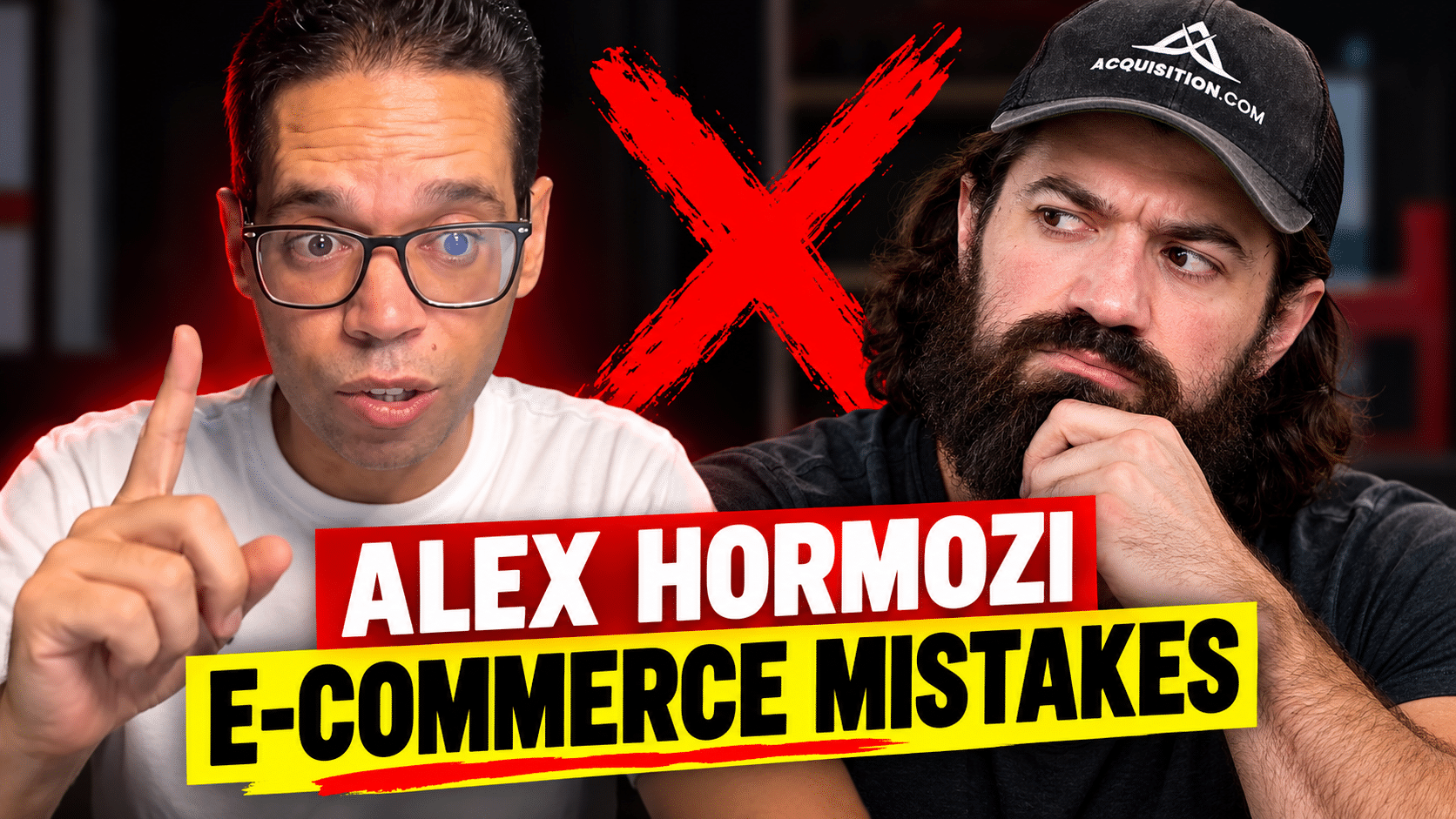
Alex Hormozi is one of the most recognizable voices in modern entrepreneurship. His books, business frameworks, and social media content have helped countless entrepreneurs rethink how they approach sales, marketing, customer acquisition, and business growth.
I respect what Hormozi has accomplished. His ability to simplify complicated business concepts into practical lessons is impressive.
But there’s something I believe many e-commerce entrepreneurs misunderstand when following his advice.
Not every strategy that works for a service business, consulting company, or high-ticket offer works equally well for an online store.
Selling a $5,000 consulting package and selling a $50 product through Shopify are two fundamentally different business models.
They have different acquisition costs, profit margins, customer expectations, operational challenges, and purchasing behaviors.
As a Shopify developer, SEO consultant, and founder of Scrowp, I’ve spent years working with online businesses and studying what makes e-commerce stores successful.
And I’ve noticed five areas where applying Hormozi-style business principles too literally can lead Shopify store owners in the wrong direction.
To be clear, these are my criticisms of how his broader frameworks are sometimes applied to e-commerce, not claims that Hormozi has personally made every mistake discussed below.
Let’s break them down.
1. A Great Offer Won’t Save a Bad E-Commerce Website
One of Alex Hormozi’s most famous concepts comes from his book $100M Offers.
The central idea is that businesses can dramatically improve sales by creating offers customers find difficult to refuse.
It’s a powerful principle.
But in e-commerce, a great offer is only one part of the conversion equation.
Imagine selling a premium skincare product for $49.
Your competitor sells a similar product for $79.
You offer free shipping, a satisfaction guarantee, and a special bundle.
On paper, your offer looks irresistible.
But what happens when potential customers visit your Shopify store?
The website takes six seconds to load.
The product images look unprofessional.
The navigation is confusing.
There are no credible reviews.
And the checkout experience creates unnecessary friction.
Your offer might be better, but your competitor could still generate more sales.
Why?
Because online shoppers evaluate much more than the offer itself.
They evaluate trust, usability, convenience, and perceived credibility.
What Shopify Owners Should Do Instead
Before investing heavily in creating more attractive offers, optimize the shopping experience.
Focus on:
- Fast loading speeds, particularly on mobile devices.
- Professional product photography.
- Clear product descriptions.
- Visible customer reviews and trust signals.
- Simple navigation and product discovery.
- Transparent shipping and return policies.
- A frictionless checkout process.
A strong offer can increase the motivation to purchase, but a poorly designed store can destroy that motivation.
My takeaway: In e-commerce, the offer gets attention. The shopping experience helps turn that attention into revenue.
2. Customer Acquisition Is Important, but Organic Discovery Is an Asset
Hormozi frequently emphasizes customer acquisition, lead generation, and the importance of reaching more potential buyers.
These are essential business skills.
However, e-commerce entrepreneurs need to distinguish between acquiring customers through paid channels and building a business that can consistently attract customers organically.
Consider two Shopify businesses.
Store A:
The business depends heavily on Facebook Ads, Instagram Ads, and Google Ads.
When advertising performs well, revenue grows.
When advertising costs increase or campaigns stop, sales decline.
Store B:
The business invests in paid advertising but also builds organic visibility through SEO, helpful content, product optimization, and brand recognition.
Over time, potential customers discover its products through Google searches and other unpaid channels.
Both businesses can succeed.
But Store B has an additional acquisition asset that doesn’t require paying for every individual click.
That doesn’t mean organic traffic is free. SEO requires time, expertise, content, and ongoing maintenance.
The difference is that its benefits can continue beyond the initial investment.
Why SEO Matters for Shopify
A properly optimized Shopify store can attract shoppers searching for products with strong purchase intent.
For example, someone searching for “best ergonomic office chair for back support” is already expressing a specific need.
If your store appears in relevant search results, you have an opportunity to reach that customer before they encounter your competitors.
This is why I consistently encourage Shopify entrepreneurs to treat SEO as a long-term business investment rather than an optional marketing feature.
That includes technical SEO, collection page optimization, product page optimization, internal linking, structured data, and content strategy.
AI-powered search experiences also make it increasingly important for brands to communicate their products and expertise clearly.
My takeaway: Don’t build an e-commerce business that only knows how to purchase attention. Build one that can also earn discovery.
3. Higher Prices Don’t Automatically Mean Higher Profits
Another principle often associated with Hormozi’s business philosophy is increasing the perceived value of an offer to support stronger pricing.
In many service businesses, premium pricing can be an excellent strategy.
But physical-product e-commerce introduces complications that service businesses may not face to the same degree.
Imagine an online store selling headphones.
The product costs $25 from the supplier.
Shipping costs $8.
Packaging costs $2.
Payment processing costs $3.
Customer acquisition costs $20.
If the store sells the headphones for $69, its contribution before other operating expenses is only $11.
Now imagine increasing the price to $99.
At first glance, this looks like a brilliant move.
The contribution per sale could rise substantially if all other costs remain unchanged.
But what if the higher price reduces conversion rates?
What if shoppers compare the headphones with established brands?
What if returns increase because customer expectations are higher?
What if advertising costs rise because fewer visitors convert?
Suddenly, the pricing decision becomes more complicated.
What Shopify Owners Should Do Instead
Analyze profitability using actual store data.
Monitor:
- Product gross margins.
- Customer acquisition costs.
- Conversion rates.
- Return and refund rates.
- Average order value.
- Customer lifetime value.
- Contribution margin after variable costs.
Test different price points rather than assuming a higher price is always better.
Sometimes premium pricing works beautifully.
Other times, competitive pricing combined with stronger repeat purchases produces better long-term results.
My takeaway: The goal isn’t simply to charge more. The goal is to maximize sustainable profitability.
4. More Traffic Doesn’t Fix a Low-Converting Shopify Store
Entrepreneurs naturally want more visitors, leads, and potential customers.
But one of the biggest mistakes I see in e-commerce is assuming that more traffic automatically means more sales.
Let’s look at a simple example.
A Shopify store receives 10,000 monthly visitors.
Its conversion rate is 1%.
That produces 100 orders.
Now suppose the store owner doubles traffic to 20,000 visitors while maintaining the same conversion rate.
The store generates 200 orders.
That sounds great.
But doubling traffic can require substantial marketing investment.
What if the owner improves the conversion rate from 1% to 2% instead?
With the original 10,000 visitors, the store also generates 200 orders.
Same order volume.
No additional traffic required.
Of course, conversion improvements are not guaranteed, and traffic quality matters enormously.
But the example illustrates an important principle.
Sometimes your biggest growth opportunity is already inside your website.
How to Improve Shopify Conversion Rates
Start by analyzing customer behavior.
Are visitors abandoning product pages?
Are they adding products to their carts but failing to complete checkout?
Are mobile shoppers experiencing usability problems?
Are shipping costs appearing too late in the buying journey?
These questions can reveal opportunities that additional advertising cannot solve.
Practical improvements include better product page layouts, clearer calls to action, stronger product descriptions, improved mobile usability, and more transparent checkout information.
You should also measure changes carefully.
An increase in conversion rate is only valuable if it improves meaningful business outcomes such as revenue and profitability.
My takeaway: Before spending more money to bring people into your store, make sure the store is capable of converting them.
5. A Powerful Offer Doesn’t Automatically Create Brand Loyalty
A compelling offer can generate a first purchase.
But what happens afterward?
This is where e-commerce becomes especially interesting.
Imagine two online stores selling fitness accessories.
The first store relies heavily on discounts, bundles, and aggressive promotions.
The second store also uses attractive offers, but it invests in product quality, customer support, reliable shipping, and a consistent brand experience.
Which store is more likely to generate repeat purchases?
The answer depends on many factors, but the second store is building advantages that go beyond the initial transaction.
Customers remember whether their products arrived on time.
They remember whether customer support resolved problems.
They remember whether the product matched its description.
And they remember how a brand made them feel after purchasing.
What Shopify Owners Should Do Instead
Think beyond the first transaction.
Create an experience that gives customers reasons to return.
That might involve post-purchase email sequences, helpful educational content, relevant product recommendations, loyalty programs, and responsive customer service.
For some stores, subscriptions or replenishment reminders may also make sense.
But don’t confuse repeat-purchase incentives with genuine loyalty.
A customer who returns only because of a 40% discount isn’t necessarily loyal to your brand.
They may simply be loyal to the discount.
My takeaway: A strong offer helps win the first sale. A strong brand helps earn the next one.
Where Alex Hormozi Is Absolutely Right
Despite these criticisms, I believe Shopify entrepreneurs can learn a tremendous amount from Hormozi.
His emphasis on understanding customers, creating value, improving offers, and measuring business performance is highly relevant to e-commerce.
His frameworks can help store owners communicate product benefits more clearly, design better bundles, improve guarantees, and think more strategically about customer acquisition.
The problem begins when entrepreneurs treat any business framework as a universal formula.
A strategy developed around one business model should be adapted before being applied to another.
And that includes e-commerce.
Selling physical products introduces unique challenges involving inventory, fulfillment, logistics, merchandising, customer expectations, and online shopping behavior.
Successful Shopify entrepreneurs need to understand those realities rather than copying advice without considering context.
My Approach: SEO, User Experience, and Sustainable Growth
At Scrowp, my approach to Shopify growth focuses on three interconnected elements.
First, get discovered.
Build a search-friendly store that can attract relevant visitors through Google and emerging AI-powered discovery channels.
Second, convert visitors.
Make sure product pages, navigation, mobile design, and the overall shopping experience help customers purchase with confidence.
Third, build sustainable growth.
Improve customer retention, measure profitability, and reduce unnecessary dependence on any single acquisition channel.
This is also the thinking behind the Scrowp Shopify Theme and my SEO and GEO consulting services.
My goal isn’t simply to help businesses attract more visitors.
It’s to help Shopify store owners create stronger foundations for long-term growth.
Final Thoughts: Learn From Alex Hormozi, but Don’t Copy Everything
Alex Hormozi has earned his reputation as an influential business educator.
But being successful in business doesn’t mean every principle can be applied identically to every industry.
E-commerce requires its own expertise.
A Shopify store isn’t just an offer.
It’s a combination of product quality, search visibility, website performance, customer experience, pricing, logistics, and trust.
Ignoring any of these elements can limit growth, regardless of how compelling your marketing might be.
My advice to Shopify entrepreneurs is simple: Learn from successful business leaders, but adapt their lessons to your own business model.
Because the most successful online stores aren’t necessarily the ones with the loudest marketing.
They’re the ones that consistently attract the right customers, convert them efficiently, and give them reasons to come back.
What do you think? Does Alex Hormozi’s business advice work equally well for e-commerce, or does online retail require a different playbook?
Read also : Choosing the right SEO domain name for successful ranking: Our guide