 By
By 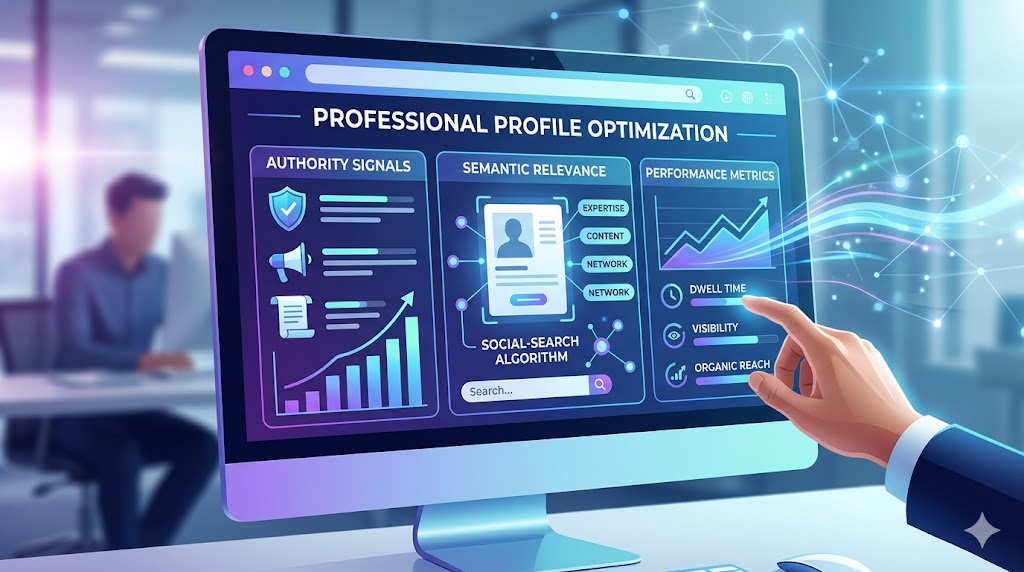
If you logged into LinkedIn in late 2025 and noticed a sudden, inexplicable drop in your organic reach, you were not alone. Across the platform, creators, founders, and professionals saw their views plummet by up to 50%, while traditional “growth hacks” stopped working overnight. This wasn’t a glitch; it was the rollout of LinkedIn’s most sophisticated AI overhaul to date, widely referred to as the “Brew 360” system.+1
Welcome to LinkedIn 2026. The platform has officially transitioned away from a pure “Social Graph” (who you are connected to) and embraced an “Interest Graph” powered by a complex “Social-Search” algorithm.
What does this mean for you? It means the platform no longer functions as a digital megaphone where posting daily guarantees an audience. Instead, LinkedIn now behaves like a highly intelligent search engine blended with a social network. It evaluates the semantic relevance of your profile, the depth of your expertise, and the specific search intent of your target audience.+1
To thrive in 2026, building an online business or personal brand requires a fundamental shift in strategy. It is no longer about chasing vanity metrics or gaming the system; it is about proving your authority. This comprehensive guide will break down the exact mechanics of the new Social-Search algorithm and provide a step-by-step blueprint for optimizing your profile and content to win.+1
Understanding the 2026 Algorithm: The Shift to Semantic Relevance
Before you can optimize your profile, you need to understand how the machine reading it actually thinks. The 2026 LinkedIn algorithm is an AI-driven visibility system designed to interpret the meaning behind your content and match it with the exact users who are searching for or engaging with those topics.
From Social Graph to Interest Graph
In the past, when you posted an update, LinkedIn primarily showed it to your first-degree connections. If they liked it, it was pushed to their connections, regardless of whether those secondary connections cared about the topic.
Today, the Interest Graph rules. The algorithm analyzes your “Topic DNA.” It identifies exactly what your niche is—for example, if you consistently discuss SEO strategies, finding low-competition keywords, and creating content for YouTube—and distributes your posts specifically to users who have demonstrated a behavioral interest in digital marketing and content creation, even if they are entirely outside of your network.
What is “Social-Search” on LinkedIn?
Social-Search is the intersection of traditional SEO and social media engagement. Users are increasingly treating LinkedIn’s search bar like Google, looking for specific solutions, service providers, and thought leaders.
When a user searches for “digital content strategist” or “YouTube channel scaling,” the algorithm doesn’t just scan for keywords. It looks for “Authority Signals.” It cross-references the search query with profiles that not only contain those keywords but also consistently publish high-engaging content on those exact subjects. To rank at the top of these searches, your profile and your content must be perfectly aligned.+2
The Foundation: Profile-Content Alignment
In 2026, your LinkedIn profile is no longer just a static digital resume; it is the core distribution engine for your content. This is the biggest SEO factor on the platform today, known as Profile-Content Alignment.
The algorithm actively reads your Headline, About section, and Experience to verify your credibility before it decides how far to push your posts in the feed. If your profile says you are a “Healthcare Executive,” but you suddenly write a viral thread about making money online, the algorithm will suppress the post. It detects a mismatch in authority.
Here is how to optimize every section of your profile for the Social-Search algorithm.
Optimizing Your Headline for Social-Search
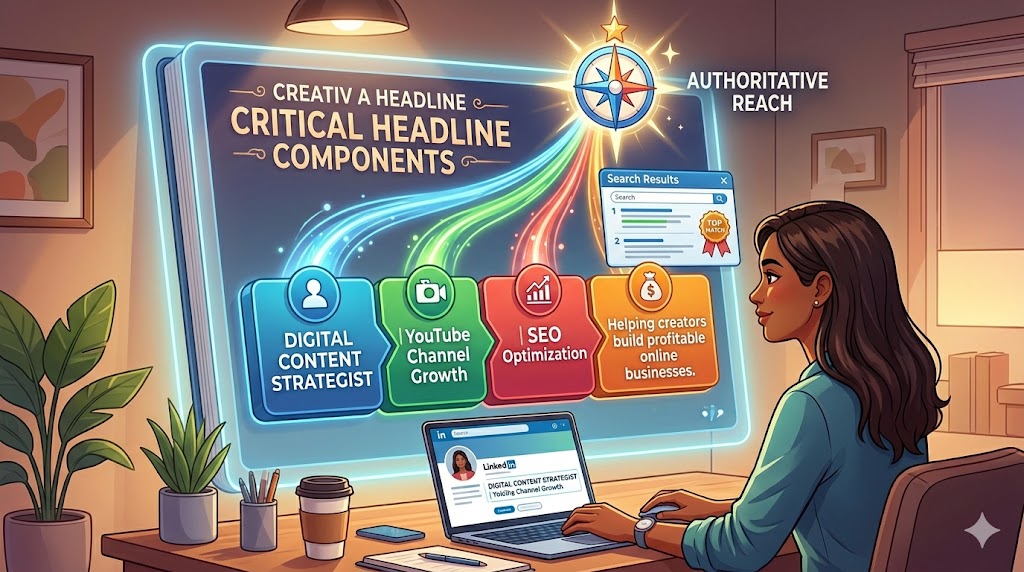
Your headline is the most heavily weighted SEO real estate on your profile. It needs to tell both the algorithm and the human reader exactly who you are, what you do, and the value you provide.
The 2026 Headline Formula: [Core Role] | [Primary Niche/Keyword] | [Secondary Niche/Keyword] | [Actionable Value Proposition]
- Bad Example: Marketing Expert | Helping companies grow | Open to new opportunities. (This is too vague. The algorithm doesn’t know where to categorize you).
- Good Example: Digital Content Strategist | YouTube Channel Growth | SEO Optimization | Helping creators build profitable online businesses. (This is highly specific, keyword-rich, and clearly defines the Topic DNA).
Mastering the ‘About’ Section for Semantic Matching
Your ‘About’ section should not read like a formal cover letter written in the third person. It should be written as a targeted landing page that satisfies the search intent of your ideal client or audience member.
To optimize this section for the Social-Search algorithm:
- The First Two Sentences: Make them punchy and clear. This is the “hook” before the user clicks See more. State exactly what problem you solve.
- Keyword Integration: Naturally weave in your core topics. If your expertise lies in organic traffic, ensure terms like “search engine optimization,” “content marketing,” and “low-competition keywords” appear organically in the text. Do not keyword stuff; the AI is smart enough to penalize unnatural phrasing.
- The Story Format: Explain why you do what you do. The algorithm favors profiles that connect personal experience to professional output.
- Clear Call-to-Action (CTA): Tell people exactly what to do next, whether it’s subscribing to your newsletter, checking out your YouTube channel, or booking a consultation.
Experience and Skills: Proving Your Authority
LinkedIn’s AI verifies your claims by cross-referencing your ‘Skills’ section with your ‘Experience’.
- Ensure your top three pinned skills perfectly match the core themes of your content.
- In your Experience section, focus on outcomes rather than just responsibilities. Use data and metrics to prove your competence.
Creating Content that Wins in 2026
Once your profile is optimized as a semantic match for your niche, you need to feed the algorithm the type of content it actively wants to promote. The days of generic motivational quotes and stock photos are over.
Dwell Time is the New “Like”
The primary metric LinkedIn measures in 2026 is Dwell Time—the exact amount of seconds or minutes a user spends looking at your post. A post that a user reads closely for 45 seconds will severely outperform a post that gets 100 rapid-fire “likes” from people scrolling past it.
The system now actively detects “click bounces.” If someone clicks “See more” on your post but scrolls away two seconds later, your content is mathematically penalized. To maximize dwell time, your content must be deeply engaging and structurally easy to read.+1
The Formats Dominating the Feed
Data from early 2026 shows a massive divide in how different formats perform. If you want to expand your reach, you must utilize the formats the algorithm favors:
1. Document Posts (PDF Carousels) Currently, multi-page PDFs are the undisputed kings of the LinkedIn feed, boasting an average engagement rate of 6.6% (the highest on the platform).
- Why they work: Every time a user swipes to the next slide, it signals active engagement to the algorithm and increases dwell time.
- Best Practices: Keep them between 5 to 10 slides. Ensure they are highly visual, easy to read on mobile, and packed with actionable, step-by-step value.+1
2. Short-Form Native Video Video content has seen a massive resurgence, but the rules have changed. YouTube embeds are heavily penalized because they take users off-platform. You must upload videos directly to LinkedIn natively.
- Optimal Specs: Keep the length between 30 and 90 seconds.
- Necessities: Always include hardcoded captions. Over 90% of LinkedIn users watch video on mobile with the sound off. If your video lacks captions, users will scroll past, killing your dwell time.
3. Strategic Text Posts While single-image posts have seen a massive decline in reach, pure text posts remain highly effective if structured correctly. They rely entirely on the strength of your copywriting.
The “Hook + Story + Lesson” Formula
To master text posts and maximize dwell time, adopt this proven framework:
- The Hook (First 150 characters): This is the text visible before the “See more” button. It must create intense curiosity or highlight a major pain point. (e.g., “Most creators spend hours editing videos, but ignore the one SEO metric that actually drives traffic…”)
- The Story: Share a brief, relevant personal experience or case study.
- The Lesson: Extract the core, actionable takeaway. Give the reader something they can implement in their own business immediately.
- The Question Bridge: End with a specific, highly targeted question to spark debate and drive comments. Avoid generic questions like “What do you think?” Instead ask, “Which of these three keyword strategies are you currently prioritizing?”
Mastering the Art of Meaningful Engagement
The Social-Search algorithm does not treat all engagement equally. In fact, the way users interact with your post tells the AI exactly how valuable your content is, which dictates its ultimate lifespan in the feed.+1
The 15x Multiplier: Why Comments Reign Supreme
In 2026, likes are essentially vanity metrics. The algorithm has heavily skewed its weight toward conversational depth. Data confirms that a comment carries 15 times more algorithmic weight than a standard reaction.+1
But not just any comment. The algorithm analyzes “Conversation Quality.” A generic comment like “Great post!” or “Thanks for sharing!” provides minimal algorithmic lift. However, a multi-sentence comment that adds perspective, asks a follow-up question, or debates your premise signals to the AI that your post is a hub of professional discourse.+1
The Golden Hour and Algorithmic Velocity
The first 60 minutes after you publish a post is known as the “Golden Hour.” During this window, LinkedIn tests your post by showing it to a small sample size—usually 2% to 5% of your network.+1
If this initial cohort scrolls past, the post dies. If they stop, read, and comment, the algorithm recognizes high “engagement velocity” and begins pushing the content to your wider network, and eventually, to 2nd and 3rd-degree connections.
Actionable Tactic: When you post, stay online. Reply to every single comment you receive within the first 15 to 30 minutes. Replying to comments quickly can generate up to a 30% algorithmic boost by creating conversation threads that draw users back to the post.
Navigating the Penalties: What NOT to Do in 2026
Just as the algorithm rewards specific behaviors, it aggressively penalizes outdated tactics. To protect your profile’s SEO ranking and organic reach, you must avoid these common pitfalls:
1. The Death of External Links
LinkedIn makes money by keeping users on LinkedIn. If you include an external link in your original post (to a blog, a sales page, or a YouTube video), your post will suffer a massive distribution penalty—often seeing up to 60% less reach.
- The Old Workaround: For years, creators bypassed this by writing “Link in the first comment.”
- The 2026 Reality: The new AI now detects this specific phrasing and penalizes the post anyway.
- The Solution: Provide 99% of the value directly within the LinkedIn post itself. If you must share a link, edit the post 24 hours later to add the link, or share it privately via direct messages with users who request it in the comments.
2. Hashtag Stuffing
Using blocks of 15 to 20 hashtags is now flagged as spam behavior. It actively confuses the semantic matching engine.
- The Solution: Use a maximum of 3 to 4 highly relevant, niche-specific hashtags per post.
3. Engagement Pods
Coordinated groups where users agree to like and comment on each other’s posts are strictly penalized. The Brew 360 AI is excellent at detecting artificial engagement patterns from the same cluster of accounts. If caught, your account will face severe reach restrictions. Organic, authentic community building is the only sustainable path forward.
Building Your 2026 LinkedIn Strategy (Actionable Roadmap)
Now that you understand the mechanics, it is time to build a sustainable publishing strategy that aligns with the Social-Search algorithm.
Finding Your Focus: The Rule of 3 Topics
Because the algorithm relies on your “Topic DNA” to distribute your content, you cannot be a generalist. Choose exactly 2 to 3 core pillars to write about.
For example, if your overarching goal is helping people build an online business, your three pillars might be:
- Technical execution: (e.g., On-page SEO, identifying low-competition keywords).
- Content strategy: (e.g., Scripting high-retention videos, thumbnail psychology).
- Mindset and Productivity: (e.g., Deep work routines, overcoming creator burnout).
If you stick to these three pillars for 90% of your posts, the algorithm will quickly learn precisely who to show your content to, resulting in higher conversion rates and a hyper-engaged audience.
Frequency and Timing: The New Best Practices
Posting three times a day is a guaranteed way to exhaust your audience and trigger the algorithm to suppress your content for “spamming.” In 2026, the focus is entirely on quality over quantity.
- Optimal Frequency: 3 to 4 highly valuable posts per week. One exceptional, deeply researched document post will yield far more business results than five mediocre text updates.
- Timing: While general benchmarks suggest posting on Tuesdays and Thursdays between 8:00 AM and 10:00 AM, the true best time to post is whenever your specific audience is online—and when you have the dedicated time to sit and reply to comments for the Golden Hour.
Tracking Your Success: Metrics That Actually Matter in 2026
To refine your strategy, you need to track the right data. Stop obsessing over raw follower counts and total impressions. Those are vanity metrics that do not pay the bills.
In the Social-Search era, focus your analytics on Value Metrics:
- Saves (Bookmarks): This is the strongest signal of value. If someone saves your PDF carousel on keyword research, it tells the algorithm your content is highly educational and worth amplifying to a wider audience.
- Shares with Commentary: A direct reshare is good, but a share where the user adds their own insightful paragraph on top of your post is algorithmic gold.
- Profile Views and Inbound Leads: Ultimately, the purpose of optimizing your LinkedIn profile is to drive business. Track how many profile views result from a specific post, and monitor your direct messages for high-quality inquiries.
Future-Proofing Your Personal Brand
The LinkedIn algorithm of 2026 is not designed to make it harder to succeed; it is designed to reward those who truly deserve attention. The shift toward Social-Search and semantic relevance means that authenticity, deep expertise, and genuine value have never been more important.+1
By optimizing your profile to clearly broadcast your niche, aligning your content formats with algorithmic preferences, and prioritizing meaningful conversations over passive scrolling, you can turn your LinkedIn presence into a highly predictable, lead-generating machine.
Stop treating LinkedIn like a bulletin board. Start treating it like a search engine fueled by human connection. Define your expertise, format your knowledge cleanly, and start building your authority today.
Related articles :
- Elevate Your Shopify Store: The Power of Premium Themes
- DTF Printing shop Shopify store creation
- Store creation and SEO for TeslaFridge
- Showcase site for a Cristal objects brick and mortar business in Tangier, Morocco
- Dating website on WordPress