
 By
By 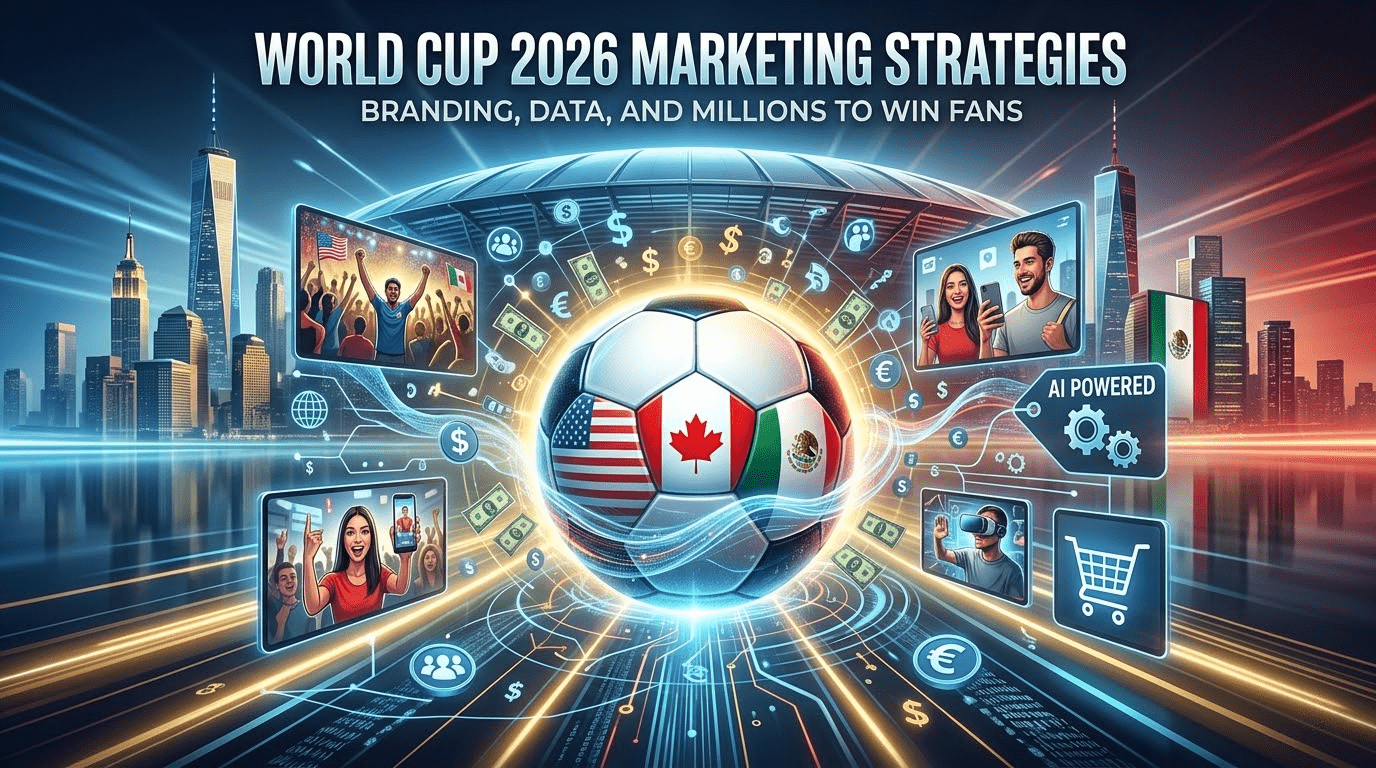
The FIFA World Cup has always been more than just a global sporting tournament; it is the ultimate arena for global commerce. However, the 2026 World Cup is shaping up to be a completely different beast. Hosted jointly by the United States, Canada, and Mexico, this event will be the most massive, geographically widespread, and digitally connected tournament in the history of sports.
For brands, this is the marketing equivalent of a gold rush. The 2026 World Cup will feature 48 teams for the first time, meaning more matches, more broadcast hours, and vastly more opportunities to capture the attention of billions. But capturing that attention is no longer as simple as buying a billboard or paying for a television commercial. Today, winning over fans requires a sophisticated blend of artificial intelligence, creator-led campaigns, immersive physical experiences, and hyper-targeted digital media.
Companies are preparing to spend hundreds of millions of dollars over the coming years. They are not just fighting for brand awareness; they are fighting for engagement, emotional connection, and instant conversions. In this article, we will break down the exact World Cup 2026 marketing strategies that top-tier brands are preparing, how they are allocating their massive budgets, and what smaller businesses can learn from these global campaigns.
The Unprecedented Scale of the 2026 FIFA World Cup
To understand the marketing strategies at play, you first have to understand the sheer scale of the event. The 2026 tournament breaks every historical mold, and marketers are being forced to adapt their traditional playbooks.
Three Host Nations, One Massive Audience
Never before has the World Cup been spread across three massive North American nations. From the bustling streets of Mexico City to the tech hubs of Toronto and the glitz of Los Angeles, the geographical footprint of this tournament is staggering. For marketers, this presents a unique challenge: how do you create a unified brand message that resonates across three distinct cultures, languages, and economic landscapes?
Brands are solving this by adopting a “glocal” strategy—global branding with hyper-local execution. A major beverage sponsor, for example, will have a core global theme (such as “unity” or “passion”), but the actual execution of that theme will look vastly different in Guadalajara than it does in Vancouver. Marketing teams are spending millions on localized market research to understand the subtle cultural nuances of soccer fandom in every single host city. They know that a generic, one-size-fits-all advertisement will be ignored by a fan base that demands authenticity.
The Expanded 48-Team Format
The expansion from 32 to 48 teams is a dream scenario for international marketing departments. An extra 16 teams means that nations which rarely or never qualify will suddenly be thrust onto the global stage. This opens up entirely new emerging markets for brands to tap into.
Imagine a country qualifying for the first time in thirty years. The national pride and viewer engagement in that specific region will be absolutely off the charts. Smart brands are already running predictive models to guess which underdog nations might qualify, allowing them to lock in cheap sponsorship deals with those national teams before their value skyrockets. The expanded format means more matches, more days of the tournament, and a prolonged window for brands to run their campaigns and maximize their return on ad spend (ROAS).
The Core Pillars of World Cup 2026 Marketing
The days of simply stamping a logo on a stadium barrier are over. The marketing strategies for 2026 are heavily reliant on technology, data, and behavioral psychology.
Hyper-Personalization and Data-Driven Campaigns
Fans today do not want to be treated like a demographic; they want to be treated like individuals. The most successful brands in 2026 will be the ones that leverage first-party data to deliver highly personalized marketing messages. If a fan in New York frequently buys merchandise for the Brazilian national team, the ads they see on their social media feeds should not be promoting the US Men’s National Team.
Brands are spending millions to build sophisticated customer data platforms (CDPs) ahead of the tournament. By tracking website behavior, past purchasing history, and app usage, companies can serve dynamic advertisements that change based on who is looking at them. This hyper-personalization extends to email marketing, SMS campaigns, and push notifications. The goal is to make every fan feel like the brand understands their specific passion for the game.
Leveraging Artificial Intelligence in Real-Time
Artificial intelligence is completely rewriting the rules of sports marketing. During a live World Cup match, the emotional state of a fan changes by the second. A sudden goal, a controversial red card, or a dramatic penalty shootout creates massive spikes in engagement on social media. Brands are using advanced AI marketing tools to monitor these real-time moments and automatically deploy contextual advertisements.
For example, if a star player scores a breathtaking goal, AI software can instantly generate a branded graphic celebrating the moment, optimize the ad copy, and push it out across Twitter, Instagram, and Facebook within seconds. This real-time marketing ensures that brands are part of the active conversation rather than just interrupting it. Furthermore, AI is being used to predict fan behavior, optimize ad bidding strategies, and even write localized copy at scale.
Social Media and Influencer Marketing Takes the Lead
The battle for the modern football fan is won and lost on the second screen. While millions of fans will be watching the matches on their televisions, their eyes will constantly dart down to their smartphones.
Short-Form Video Dominance (TikTok, Reels, Shorts)
The 2026 World Cup will be the first to be fully dominated by the short-form video era. TikTok, Instagram Reels, and YouTube Shorts will be the primary battlegrounds for fan attention. Brands are reallocating massive portions of their TV ad budgets into creating native, fast-paced vertical video content.
The strategy here is not to post highly polished, corporate commercials. Instead, brands are leaning into raw, unpolished, user-generated-style content. They want to capture the atmosphere of the fan zones, the reaction videos of people watching in pubs, and the behind-the-scenes culture of the tournament. Short-form video algorithms reward high engagement, meaning a clever, low-budget 15-second clip can easily outperform a multi-million-dollar TV spot if it captures the cultural zeitgeist of the tournament.
Micro and Macro Influencer Collaborations
Historically, brands spent their entire influencer budgets on signing global superstars like Lionel Messi, Cristiano Ronaldo, or Neymar. While these mega-endorsements still exist, the strategy has shifted significantly toward micro and mid-tier influencers.
In 2026, brands will partner with thousands of localized content creators—football freestylers, tactical analysts, sports podcasters, and even lifestyle vloggers who happen to be attending the games. Why? Because micro-influencers have deeply engaged, highly trusting communities. When a popular local TikTok creator recommends a specific brand of sportswear or a new energy drink while vlogging their trip to the stadium, the conversion rate is often vastly higher than a traditional billboard. This decentralized approach to influencer marketing allows brands to build a massive, organic-feeling presence across the internet.
Experiential Marketing: Bringing the Stadium to the Fans
Not everyone can afford a ticket to a World Cup match, especially with the high cost of travel across North America. To reach the 99% of fans who will not be in the stadium, brands are heavily investing in experiential marketing.
Immersive Fan Zones Across North America
Experiential marketing is about creating memorable, physical interactions between the consumer and the brand. In 2026, major sponsors will build colossal “Fan Zones” in major cities across the US, Canada, and Mexico. These are not just places with big screens to watch the game; they are massive branded theme parks.
Fans might find themselves testing their kicking speed in a high-tech simulator sponsored by a sportswear company, or trying a new flavor of an international snack brand while watching live music. These physical touchpoints are incredibly valuable. When a fan has a genuinely fun, memorable experience provided by a brand, they build long-term emotional loyalty. Furthermore, these events are designed to be highly “Instagrammable,” encouraging attendees to take photos and share them online, effectively giving the brand free organic reach.
Virtual Reality (VR) and the Metaverse Experience
For fans who cannot make it to the host nations at all, brands are building digital experiences. The concept of the “metaverse” and virtual reality will play a notable role in 2026 marketing. Companies are creating digital twin stadiums where fans from India, Japan, or Brazil can log in with a VR headset, walk around a virtual concourse, interact with other fans, and buy digital merchandise for their avatars.
While still an emerging technology, the PR value of these digital activations is immense. It positions the sponsoring brands as forward-thinking and innovative, capturing the attention of the younger, tech-savvy Gen Z and Gen Alpha demographics.
High-End and Luxury Brand Activations
The World Cup does not just attract everyday sports fans; it is a massive networking event for the global elite. Billionaires, celebrities, politicians, and corporate executives flock to the tournament, creating a highly lucrative sub-market.
Catering to VIPs and High-Ticket Consumers
Luxury brands—think high-end watchmakers, luxury auto manufacturers, and exclusive fashion houses—do not market to the masses. Their strategies are entirely focused on exclusivity. They are designing incredible luxury marketing campaigns centered around the VIP hospitality suites in the stadiums.
These campaigns often involve private invite-only parties, chauffeur services in branded luxury vehicles to and from the matches, and limited-edition product drops that are only available to those holding VIP tickets. The goal here is not mass volume; it is high-margin prestige. By associating their products with the pinnacle of global sporting excellence and the exclusivity of the VIP experience, luxury brands solidify their status among high-net-worth individuals.
Omnichannel Retail and E-Commerce Integration
The ultimate goal of all this marketing is, of course, to drive revenue. The 2026 World Cup will see the tightest integration between sports entertainment and e-commerce in history.
Seamless In-App Purchasing
The distance between seeing a product and buying a product has been reduced to practically zero. Brands are ensuring that every piece of digital content they produce is “shoppable.” If a fan is watching a brand’s livestream on Instagram and sees a jacket they like, they can simply tap the screen, select their size, and check out using Apple Pay without ever leaving the app.
This frictionless commerce is vital because the emotional high of a football match is fleeting. If a fan’s team wins, they are highly susceptible to an impulse purchase. If the checkout process takes more than 30 seconds, or requires creating an account, the brand loses the sale. Every major retailer is currently stress-testing their e-commerce infrastructure to handle massive spikes in traffic during crucial matches.
Affiliate and Performance Marketing
Behind the scenes, a massive network of publishers, bloggers, and discount sites will be driving sales through performance marketing. Brands understand that they cannot reach every corner of the internet alone. By utilizing advanced affiliate marketing strategies, sports retailers incentivize third-party content creators to write buyer’s guides, jersey reviews, and match day outfit roundups. Every time a reader clicks a link in one of these articles and buys a shirt, the creator gets a small commission. This creates an army of independent marketers pushing the brand’s products around the clock, paying only for guaranteed results.
Sustainability and Purpose-Driven Marketing
The modern consumer is highly critical of massive corporate events. The environmental impact of flying 48 teams and millions of fans across a continent as large as North America is immense. Brands know that they cannot just ignore this reality.
The Eco-Conscious Fan
Marketing strategies in 2026 will heavily feature sustainability initiatives. However, brands must tread carefully to avoid accusations of “greenwashing” (pretending to be environmentally friendly without making real changes). Successful campaigns will highlight tangible actions: jerseys made from recycled ocean plastic, zero-waste fan zones, and carbon-offset programs for fan travel.
Social Responsibility Initiatives
Beyond the environment, purpose-driven marketing will focus on grassroots community impact. The most respected brands will be those that use their World Cup budgets to leave a lasting legacy. Building local football pitches in underprivileged neighborhoods in the host cities, funding youth sports programs, and promoting inclusivity in sports will be central themes. Consumers today want to buy from brands that align with their personal values, and a well-executed social responsibility campaign can generate immense goodwill.
The Budget Breakdown: Where Are the Millions Going?
When you hear that a brand is spending $50 million on the World Cup, how exactly is that money distributed? The breakdown has shifted dramatically over the last decade.
TV Broadcasting vs. Digital Spend
In the past, 80% of a marketing budget might go straight to television networks for prime-time commercial slots. In 2026, that pie is split much more evenly. While live TV broadcasts still command a premium (because sports are the last remaining form of guaranteed live viewership), digital channels are taking a massive share. Budgets are heavily weighted toward platform algorithms, paid search, targeted social media ads, and paying the vast network of influencers required to generate consistent noise.
The Cost of Official FIFA Sponsorship
Being an official Tier 1 FIFA sponsor costs tens of millions of dollars before a single ad is even created. This grants the brand the exclusive right to use the official World Cup logo, the mascot, and the phrase “World Cup 2026.”
However, many brands choose to run “guerrilla marketing” campaigns. These are non-sponsors who creatively associate themselves with the event without breaking trademark laws. They might run campaigns themed around “The Summer of Soccer” or use the colors of the national teams. This allows them to ride the wave of cultural excitement and spend their entire budget on actual ad placement rather than paying exorbitant licensing fees to the governing body.
Conclusion
The World Cup 2026 is going to be a masterclass in modern marketing. The brands that win will not necessarily be the ones with the deepest pockets; they will be the ones that understand how to seamlessly blend digital innovation, physical experiences, and authentic storytelling. By leveraging AI, dominating short-form video, personalizing at scale, and removing all friction from e-commerce, the world’s smartest companies are preparing to turn billions of viewers into lifelong fans and customers. The millions spent today are an investment in the cultural relevance of tomorrow.
Frequently Asked Questions (FAQ)
1. Why is the 2026 World Cup considered a unique marketing opportunity? The 2026 tournament is unique because it is hosted by three large nations (USA, Canada, Mexico) and features an expanded format of 48 teams. This creates an unprecedented geographical footprint and allows brands to reach entirely new, diverse markets on a massive scale.
2. How are brands using AI for World Cup marketing? Brands use AI to analyze real-time social media trends, instantly generate personalized ad copy, and push contextual advertisements during key match moments (like a goal being scored). AI also helps predict consumer behavior to optimize ad bidding.
3. What is experiential marketing in the context of the World Cup? Experiential marketing involves creating immersive, physical brand experiences for fans. This includes building massive Fan Zones, interactive pop-up shops, and high-tech physical games outside stadiums, allowing fans to interact directly with the brand in a memorable way.
4. Will TV commercials still be relevant in 2026? Yes, live sports remain the most powerful driver for live TV viewership. However, TV commercials are no longer the sole focus. Brands are splitting their budgets to ensure they simultaneously dominate “second screens” like smartphones and social media apps.
5. How do non-sponsors market during the World Cup? Non-sponsors use guerrilla marketing tactics. They avoid using official trademarks like the FIFA logo or the term “World Cup,” but they create soccer-themed campaigns using national colors and general football imagery to capitalize on the global excitement.
6. Why are brands shifting from celebrity athletes to micro-influencers? While celebrity athletes offer massive reach, micro-influencers offer deeply engaged, niche audiences with higher trust levels. Partnering with localized creators often results in better conversion rates and feels more authentic to everyday fans.
7. How important is e-commerce integration during the tournament? It is critical. Brands are focused on “shoppable content,” allowing fans to buy jerseys, merchandise, or related products directly within social media apps in just a few clicks, capturing impulse purchases driven by the emotion of the games.
8. What role does sustainability play in 2026 marketing? Modern consumers demand corporate responsibility. Brands are launching purpose-driven campaigns focusing on eco-friendly merchandise, carbon-offset travel initiatives, and funding local grassroots sports programs to build authentic goodwill and avoid greenwashing.
Related Articles
- Impact.com Review 2026: Is It the Best Affiliate Marketing Platform?
- 24 AI marketing tools to expend your business
- The “Billionaire Bunker” Aesthetic: Luxury Marketing Campaigns
- Affiliate Marketing: A Guide to Making Money Online
- Top Digital Products to Sell in 2026: The Complete Guide