 By
By 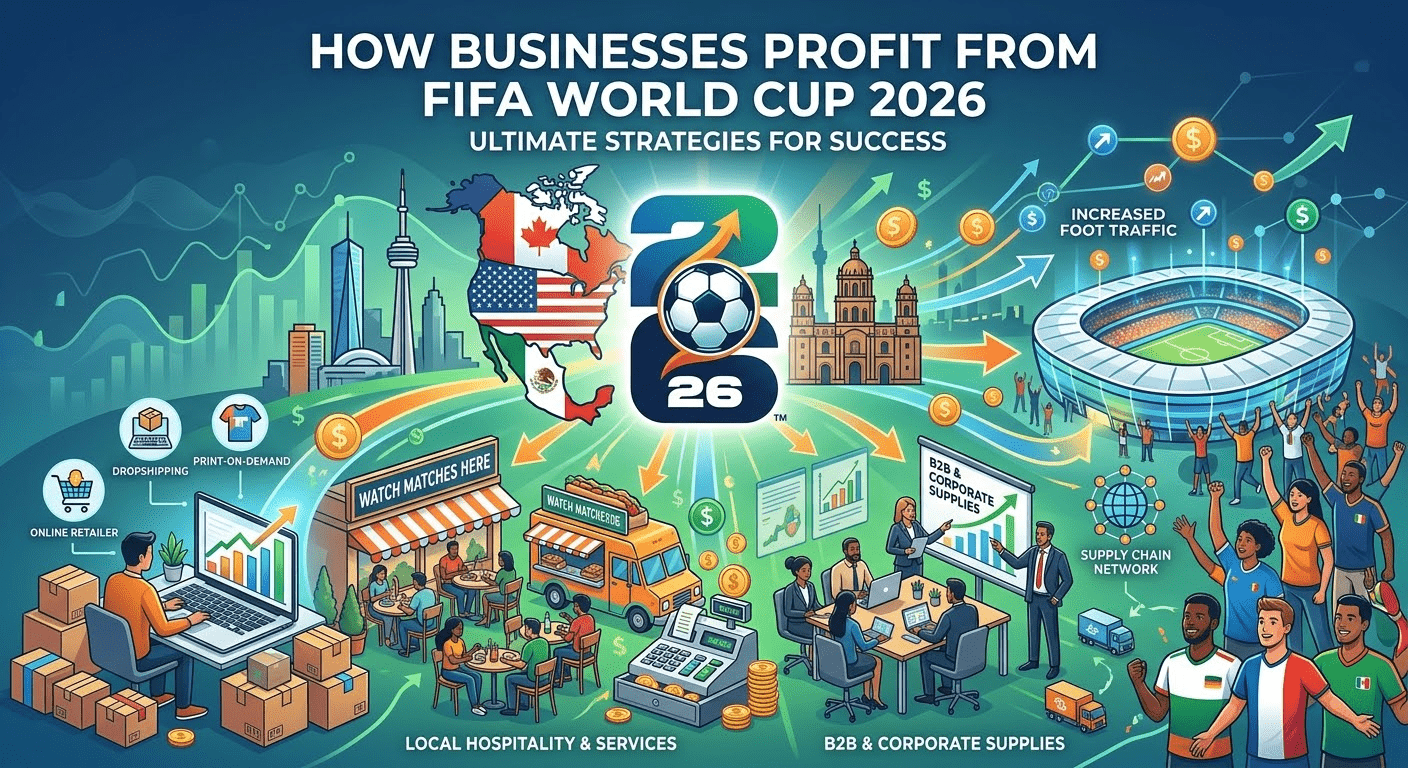
The FIFA World Cup is not just a global sporting event; it is a massive economic engine. When the tournament arrives in 2026, it will bring an unprecedented wave of consumer spending. Hosted jointly by the United States, Canada, and Mexico, this will be the largest World Cup in history, featuring 48 teams and spanning 104 matches across 16 different cities.
For businesses of all sizes, this represents a golden opportunity. You do not need to be an official, multi-million-dollar sponsor to capture a piece of this economic boom. Whether you run an e-commerce store, a local restaurant, a digital marketing agency, or a B2B service, there are practical, highly profitable ways to leverage this event.
The key to succeeding is preparation. Businesses that start planning their marketing, inventory, and search engine optimization (SEO) strategies early will be the ones that dominate their competitors when the first whistle blows. In this guide, we will break down exactly how different types of businesses can profit from the 2026 World Cup, offering simple, actionable strategies that you can start implementing today.
The Unprecedented Scale of the 2026 World Cup
To understand how to profit from the World Cup, you first need to understand the sheer scale of the 2026 tournament. Previous World Cups featured 32 teams. The jump to 48 teams means more fans, more matches, and a significantly longer period of sustained consumer interest.
Because the tournament is spread across North America, the timezone layout is incredibly favorable for prime-time viewing in the Americas and decent viewing hours for Europe and Asia. Millions of tourists will flood into the 16 host cities—including New York/New Jersey, Los Angeles, Toronto, Miami, and Mexico City.
However, the economic impact is not limited to these host cities. The “watch party” culture will take over everywhere. People will gather in homes, bars, and public squares across the globe. This widespread enthusiasm drives a surge in demand for food, beverages, apparel, electronics, and digital media. The money will flow from international tourists on the ground, but it will also flow from everyday consumers watching from their living rooms.
E-commerce and Retail: Winning the Digital Game
Online retail is perhaps the easiest and most scalable way to profit from the World Cup. Consumers will be searching for ways to support their teams and improve their viewing experiences at home.
Capitalizing on Print-on-Demand and Merchandise
Apparel is always the biggest seller during any sporting event. While you cannot legally print official FIFA logos or trademarked team crests without a license, you can still profit massively from the culture surrounding the teams.
Smart e-commerce owners create country-specific, culture-based designs. Think about inside jokes, historical football phrases, or flag-colored clothing that skirts trademark rules while clearly appealing to specific fanbases. Using print-on-demand services allows you to offer hundreds of designs without holding any physical inventory. You can quickly test which country’s fanbase is buying the most and scale your advertising budget toward the winners.
Scaling with Dropshipping
If you want to move beyond basic apparel, dropshipping offers a way to sell physical goods with very low overhead. During the World Cup, fans buy face paint, flags, noise-makers, party supplies, and novelty items.
By setting up a reliable Shopify dropshipping store, you can source these products directly from suppliers and have them shipped to customers. The secret here is to build your store early and ensure your shipping times are fast. People buying items for a match on Tuesday will not wait three weeks for delivery. Find reliable, localized suppliers in North America to guarantee fast fulfillment.
The Demand for High-Ticket Viewing Gear
Not everyone is selling five-dollar party supplies. There is a massive market for high-ticket e-commerce during the World Cup. Fans want to watch the games in the best possible quality. This drives a surge in sales for outdoor televisions, home theater projectors, high-end soundbars, and luxury patio furniture for hosting watch parties.
If you are running a faceless inbound SEO strategy, the World Cup is the perfect time to build topical authority around “home entertainment setups for sports.” By ranking for high-intent keywords like “best outdoor projector for daytime viewing” or “surround sound for sports,” you can drive massive organic traffic to high-ticket affiliate offers or premium dropshipped goods.
Local Services and the Hospitality Boom
If your business has a physical footprint, especially in or near one of the 16 host cities, the 2026 World Cup is a lottery ticket. The influx of tourists will stretch local infrastructure to its limits, creating opportunities for businesses willing to step up.
Maximizing Foot Traffic for Restaurants and Bars
Bars and restaurants are the natural hubs for World Cup viewing. To maximize profit, you need to go beyond simply turning on the TV.
Create themed menus based on the teams playing that day. For example, if Argentina is playing Mexico, offer special empanadas and tacos, alongside regional beers. Run “match-day packages” where customers can book a table for a fixed minimum spend, guaranteeing your revenue even if they just sit and watch the game for three hours. Additionally, ensure your Google Business Profile is updated with your match-showing schedule. Tourists will be searching for “where to watch the game near me,” and your local SEO needs to be flawless to capture them.
The Surge in Short-Term Rentals
The hotel capacity in host cities will be exhausted very quickly. If you own property, manage real estate, or operate an Airbnb business, this is the time to optimize your listings.
Property managers can profit by offering premium services to guests, such as stocking the fridge with local beers before arrival, providing transportation guides to the stadiums, or offering daily cleaning services. If you operate a cleaning company, partner with local Airbnb hosts right now to become their exclusive cleaning vendor during the chaotic tournament weeks.
Local Transport and Convenience Services
Moving thousands of people from airports to hotels and from hotels to stadiums is a logistical nightmare. Local transportation businesses, private car services, and even specialized tour guides can make a fortune.
Create dedicated “Stadium Transfer Packages” and advertise them directly to incoming tourists. Furthermore, mobile businesses—like food trucks, mobile phone charging stations, and pop-up merchandise stands—should secure permits early to operate along the heavy foot-traffic routes leading to the stadiums and official fan zones.
Digital Marketing Tactics for the Tournament
You can have the best product in the world, but if no one can find it during the noise of the World Cup, you will not make any money. Your digital marketing strategy needs to be sharp, localized, and intent-driven.
Event-Driven SEO and Keyword Planning
SEO takes time. If you want to rank for World Cup-related terms in the summer of 2026, you need to publish your content months, if not a year, in advance.
Create content silos around the event. If you run a travel blog, write deep-dive guides into “How to navigate public transport in Miami during the World Cup.” If you sell electronics, write guides on “How to set up the ultimate backyard watch party.” Focus on long-tail keywords that the massive media outlets might ignore. Answer the specific, practical questions that real fans will be typing into Google.
Building Trust with Customer Reviews
During major events, consumers are often shopping in a rush and buying from brands they have never heard of before. Trust is the ultimate conversion metric.
If a fan lands on your website to buy a team jersey or a party kit, they need to know you are legitimate. This is where Shopify social proof becomes critical. Ensure your product pages feature highly visible, photo-based reviews from past customers. A store with a solid wall of five-star visual reviews will out-convert a store with better prices but no proof of delivery every single time.
Geotargeted Advertising and Real-Time Marketing
Paid ads will be expensive during the World Cup, as big brands flood the market with their budgets. To compete, small and medium businesses must use highly specific geotargeting.
Do not run ads globally. Run ads exclusively in a 5-mile radius around the stadium on match day, promoting your local restaurant’s post-game party. Use real-time marketing on social media. If a crazy moment happens in a match, the brands that can make a clever, relevant meme or post within five minutes will capture massive, free viral reach.
B2B and Corporate Opportunities
While retail and hospitality grab the headlines, the Business-to-Business (B2B) sector often sees the highest profit margins during global events.
Supplying the Service Industry
Restaurants, hotels, and bars will be operating at 200% capacity. They will run out of supplies. If you are a B2B wholesaler, this is your time to shine.
Reach out to local hospitality businesses months in advance and offer emergency restock contracts. Whether you supply biodegradable takeout containers, commercial cleaning supplies, kegs of beer, or fresh produce, position yourself as the reliable partner who can deliver on short notice when the primary supply chains inevitably face shortages.
Corporate Hospitality and VIP Experiences
Corporations use the World Cup to entertain their biggest clients. They do not want standard tickets; they want an experience.
If you run an event planning or concierge business, build high-end corporate packages. Bundle premium match tickets with private airport transfers, luxury dinners, and exclusive after-party access. Sell these packages directly to major law firms, tech companies, and financial institutions that are looking for ways to impress their top-tier clients and partners.
Preparing Your Business Operations in Advance
Profit is revenue minus expenses. If your operations break down during the rush, your expenses will wipe out your profits. You must stress-test your business before the tournament begins.
Securing Your Supply Chain Early
The absolute worst thing that can happen is running out of stock right as demand peaks. Analyze what you expect to sell and order your inventory well in advance. Keep a close eye on global shipping times, as ports often get congested leading up to massive global events. Having your product sitting in a local warehouse gives you an immense advantage over competitors who are waiting on international shipments.
Stress-Testing Your Website and Operations
If you run an e-commerce store, what happens if your traffic suddenly spikes by 500%? If your website crashes, you lose money every single second. Upgrade your hosting plans, optimize your image sizes, and ensure your checkout process is seamless and fast.
For local businesses, ensure your point-of-sale (POS) systems are updated and that you have hired and trained enough seasonal staff. The businesses that profit the most from the World Cup are not necessarily the ones with the most unique ideas; they are simply the ones whose systems do not break under pressure.
Conclusion
The 2026 FIFA World Cup is a rare economic event that bridges digital commerce, local hospitality, and global B2B supply chains. Businesses that look ahead and engineer their growth systems now will reap massive rewards. Whether you are launching a faceless e-commerce store to sell high-ticket electronics, optimizing a local restaurant’s SEO for foot traffic, or supplying the hospitality industry, the key is execution. Do not wait until 2026 to start planning. The businesses that will profit the most are already building their foundations today.
Frequently Asked Questions (FAQs)
1. How early should I start marketing for the 2026 World Cup?
You should start planning your strategy at least 12 to 18 months in advance. For SEO and content marketing, publishing articles a year ahead of time allows them to index and rank properly. For physical products, you should be testing ad creatives and sourcing suppliers six months prior to the event.
2. Can small businesses compete with big brands during the World Cup?
Yes, by being hyper-specific. Big brands target broad, global audiences. Small businesses win by dominating specific niches—such as hyper-local search terms (e.g., “best Mexican bar in downtown Miami”) or highly specific e-commerce niches (e.g., “vintage football posters”).
3. What are the best e-commerce niches for the 2026 World Cup?
High-ticket home entertainment (projectors, outdoor seating, sound systems) is incredibly profitable. Alternatively, print-on-demand country-specific apparel, party supplies, novelty items, and outdoor BBQ equipment always see massive spikes in demand.
4. Are there strict copyright laws for using World Cup logos?
Yes, FIFA is notoriously strict about protecting its intellectual property. You cannot use official logos, the World Cup trophy image, the official mascot, or trademarked slogans without an expensive license. Instead, use generic football imagery and country flag colors to appeal to fans legally.
5. How can local restaurants attract foreign tourists?
Optimize your Google Business Profile with keywords related to the tournament. Post your menu in multiple languages (especially English, Spanish, and French). Run localized social media ads targeting people physically located near the stadiums or popular tourist hotels.
6. Is dropshipping a viable business model for World Cup merchandise?
Yes, but only if you have fast shipping. Do not rely on overseas suppliers with 20-day delivery times during a fast-paced tournament. Use localized dropshipping suppliers in the US, Canada, or Mexico to ensure items arrive before the matches happen.
7. Which cities will see the most economic impact?
The 16 host cities will see the most direct impact. These include major hubs like New York/New Jersey, Los Angeles, Dallas, Miami, Toronto, Vancouver, and Mexico City. However, the economic ripple effect will be felt nationwide through e-commerce and local watch parties.
8. How can I optimize my website for World Cup-related searches?
Create dedicated landing pages or blog categories specifically for the tournament. Use tools to find long-tail keywords that people are searching for (e.g., “Where to park near Miami stadium 2026”). Ensure your site loads quickly on mobile devices, as the vast majority of tourists will be searching from their phones.
Related Articles
- Engineering the Digital Shadow: Faceless Inbound SEO & eCommerce
- Shopify: E-commerce Dropshipping Platform
- Loox Review App (2026): The Ultimate Guide to Shopify Social Proof
- AI SEO for E-commerce: The Future of Online Retail
- Shopify Agency in Tangier Morocco